Deforestation: A silent crisis threatening climate, livelihoods and biodiversity
Forests are far more than collections of trees,they are complex living systems that regulate climate, protect water sources, sustain biodiversity, and support millions of livelihoods. Yet across the world, we are witnessing an accelerating and often underestimated crisis: deforestation.
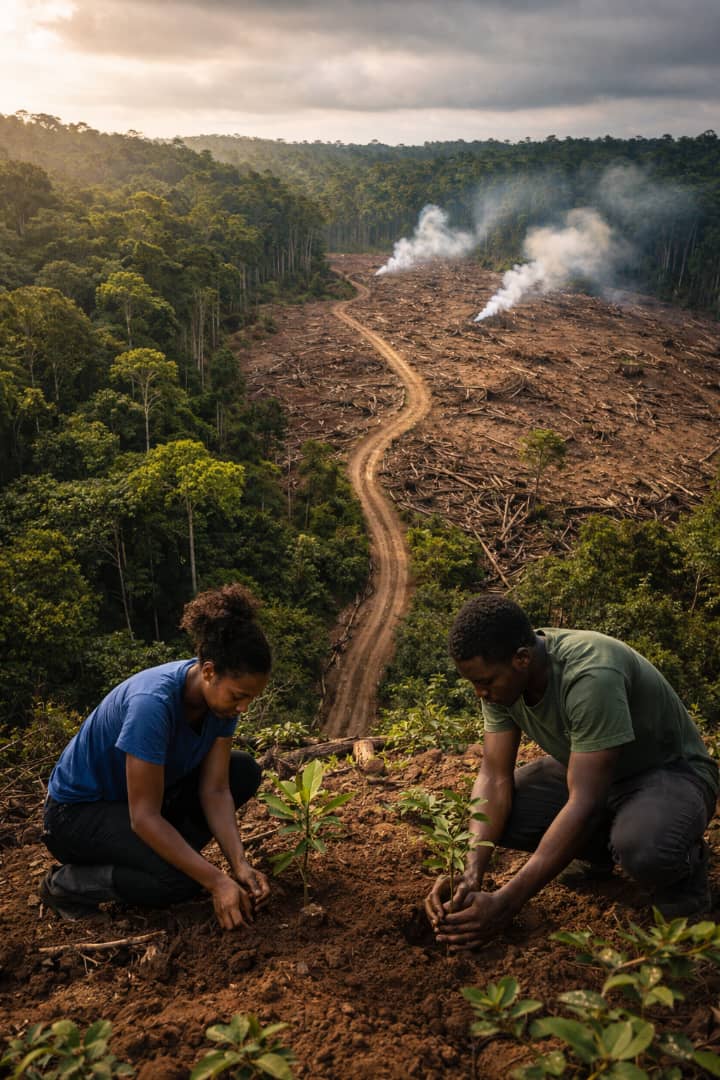
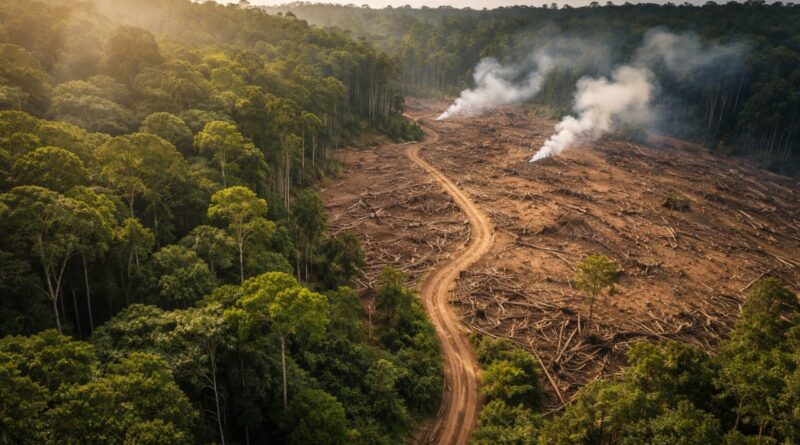
The contrast captured in the image above reflects a global reality. On one side stands a thriving forest ecosystem rich in biodiversity; on the other, a degraded landscape marked by tree loss, soil exposure, and environmental decline. According to the (FAO), the world has lost approximately 420 million hectares of forest since 1990, largely due to agricultural expansion, logging, and infrastructure development.
This scale of loss has far-reaching consequences.
Scientific research highlights that forests play a critical role in regulating rainfall patterns through evapotranspiration, a process essential for maintaining regional and global water cycles.
When forests are cleared, this balance is disrupted, often leading to irregular rainfall, prolonged droughts, and increased vulnerability to extreme weather events.
Studies supported by the indicate that deforestation contributes nearly 10–15% of global greenhouse gas emissions, making it a major driver of climate change.
The impacts are equally severe at the local level. Soil, once protected by forest cover, becomes exposed and highly vulnerable to erosion. In countries like Rwanda, where land pressure is already high, this can intensify problems such as landslides and declining agricultural productivity.
Research from the (UNEP) shows that deforestation reduces soil fertility over time, directly affecting food security and rural livelihoods.
Biodiversity loss is another critical concern. Forests are home to over 80% of terrestrial species. When forests are destroyed, species lose their habitats, leading to population declines and, in some cases, extinction.
This weakens ecosystems and reduces their resilience to environmental changes.
At the same time, forests are among the most effective natural solutions to climate change. They act as carbon sinks, absorbing significant amounts of carbon dioxide from the atmosphere. The emphasizes that restoring degraded forests could contribute substantially to global climate mitigation efforts while also enhancing biodiversity and ecosystem services.
At GREEN AFRICA Rwanda Initiative, we recognize that addressing deforestation requires integrated, science-based and community-driven solutions. Promoting agroecology, supporting reforestation and afforestation efforts, strengthening environmental policies, and empowering local communities are key pathways toward sustainable land management.
Equally important is collaboration. Governments, development partners, research institutions, civil society organizations, and local communities must work together to protect existing forests and restore degraded landscapes. Without collective action, the environmental, social, and economic costs of deforestation will continue to rise.
The future of our planet depends on how we respond today. Protecting forests is not only about conserving nature it is about securing climate stability, safeguarding livelihoods, and ensuring a sustainable future for generations to come.