NISR study reveals growth in crop production for season A 2026
The National Institute of Statistics of Rwanda (NISR) has released the Agricultural Survey Report for Season A 2026, presenting an assessment of how the production of key staple crops has evolved in comparison with Season A of 2025.
The report indicates that, overall, the majority of crops registered an increase in output, although a few experienced marginal declines. This trend underscores a steadily strengthening agricultural sector, albeit one that continues to face structural and climatic constraints requiring targeted interventions.
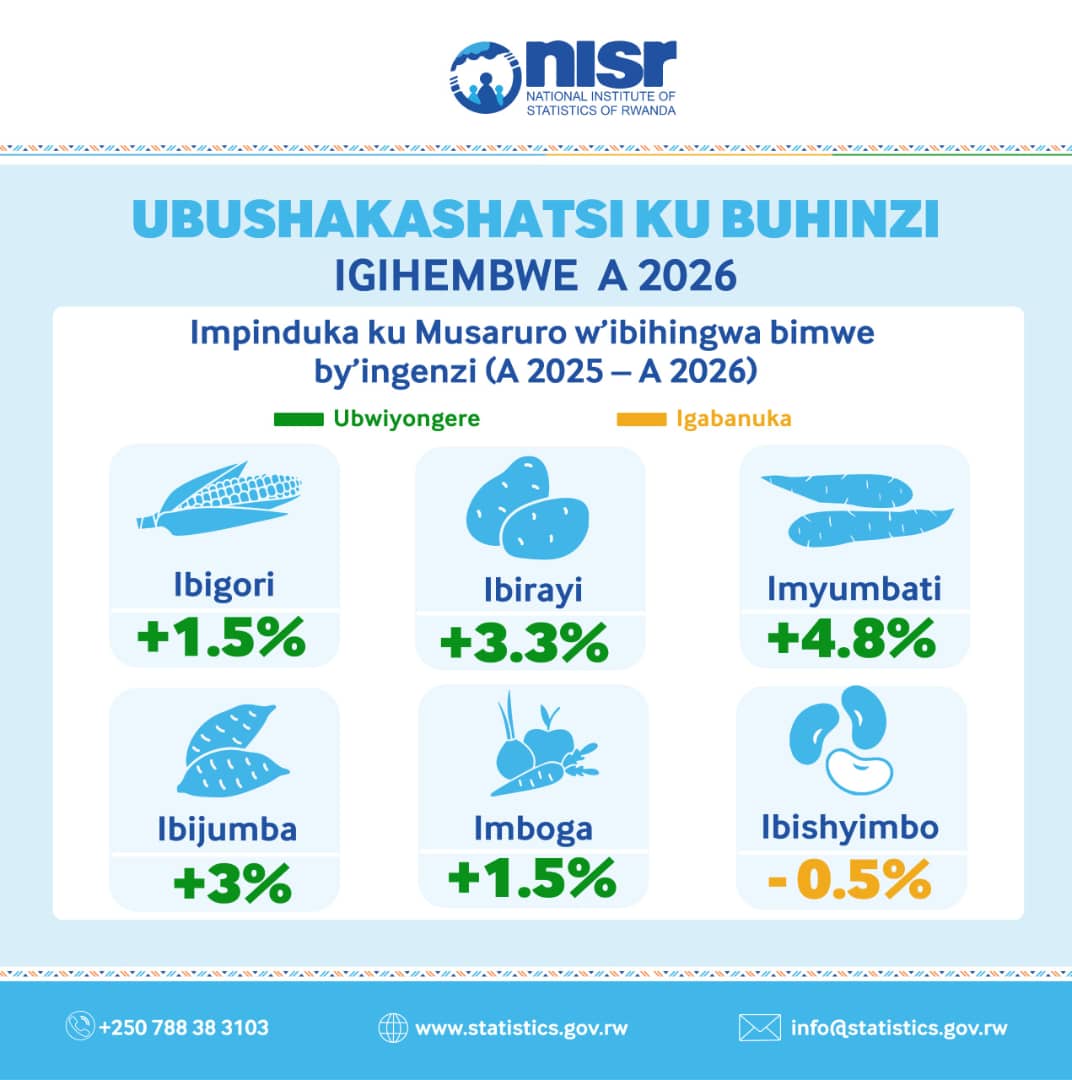
Among the crops that demonstrated notable growth, cassava led with a 4.8% increase, reaffirming its critical role in enhancing food security and rural livelihoods, particularly due to its resilience to climatic variability relative to other staples. Irish potatoes recorded a 3.3% rise, highlighting their continued economic significance for farming households, especially in the cooler agro-ecological zones of the Northern and Western Provinces. Beans increased by 3%, further consolidating their importance in improving nutritional outcomes, particularly as a primary source of plant-based protein in the national diet.
Maize and vegetables both registered a moderate growth rate of 1.5% each. Although relatively modest, this increment still contributes meaningfully to the aggregate expansion of agricultural output and reflects incremental productivity gains within these subsectors.
On the other hand, beans also recorded a slight decline of 0.5%, a contraction that may be attributed to a combination of factors including climatic stressors, crop diseases, and suboptimal land management practices.
Collectively, these findings suggest a generally positive trajectory for Rwanda’s agricultural sector, particularly in crops central to household consumption and national food systems. The observed growth is likely associated with ongoing agricultural intensification strategies, including the adoption of improved seed varieties, increased fertilizer application, and the gradual uptake of modern irrigation and agronomic practices.
Nevertheless, the contraction observed in certain crops signals persistent vulnerabilities within the sector, notably climate variability, land fragmentation, and pest and disease prevalence, all of which continue to undermine consistent productivity gains.
In conclusion, the report presents an encouraging outlook for national food security while simultaneously emphasizing the necessity of reinforcing climate-resilient and sustainable agricultural systems aimed at further enhancing productivity and improving rural livelihoods.