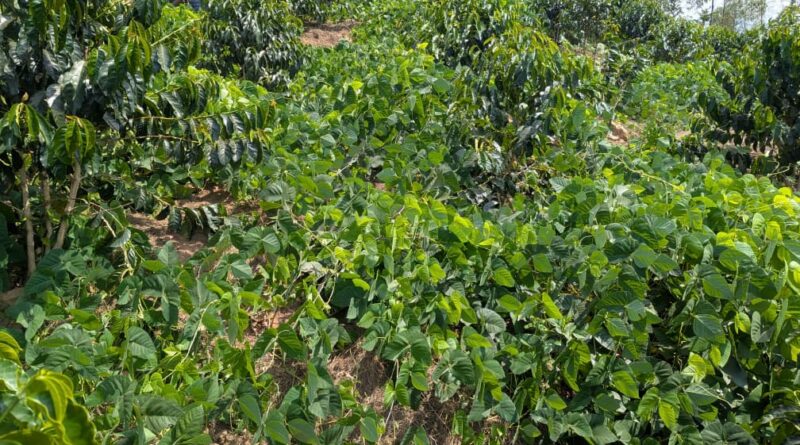
Gakenke: How Mucuna cover crops Are transforming coffee farming
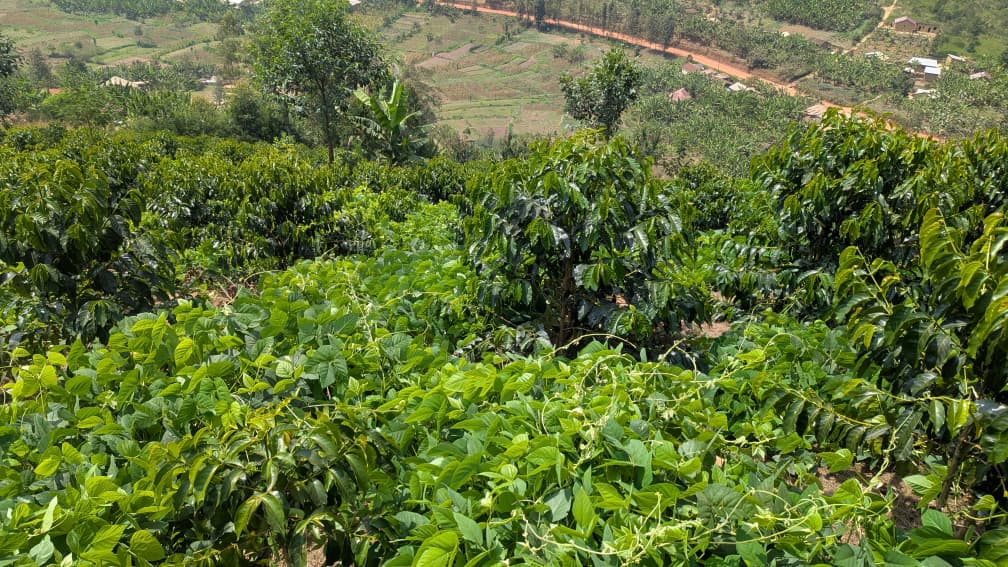
As part of efforts to promote sustainable coffee cultivation while reducing the financial burden associated with procuring mulch and fertilizers, coffee farmers in Gakenke District are increasingly embracing Mucuna/Mukuna, a leguminous cover crop widely recognized for its capacity to enhance soil fertility, suppress weeds, and improve coffee productivity.
Belonging to the legume family, Mucuna possesses the remarkable ability to biologically fix atmospheric nitrogen, thereby enriching the soil with one of the most essential nutrients required for vigorous crop growth. Beyond serving as an effective mulch, the plant conserves soil moisture, mitigates the adverse effects of prolonged dry spells, and creates favorable conditions for healthy coffee development.
Jean Nepo BIGANZA, the Agronomist for Gakenke Sector, explained that Mucuna plays a pivotal role in integrated coffee production systems by naturally suppressing weeds, consequently reducing habitats where crop pests typically proliferate.
«”Mucuna is a leguminous cover crop primarily utilized for mulching and green manuring. Unlike certain botanical species that possess insect-repellent properties, Mucuna does not directly eliminate pests. Instead, it suppresses weed growth, thereby depriving insects of the shelter they would ordinarily find among dense vegetation.”»
He further noted that the crop is propagated from seeds harvested from mature pods approximately three months after planting, with sowing practices comparable to those used for common beans. According to him, the seeds are supplied through the Rwanda Agriculture and Animal Resources Development Board (RAB) following rigorous agronomic research. In addition to its agronomic benefits, Mucuna foliage serves as highly nutritious livestock fodder capable of enhancing milk production.
Evariste Kanyetariki, Gakenke District’s Officer in charge of Cash Crops, emphasized that introducing Mucuna has substantially alleviated one of the most persistent challenges facing coffee growers—the high cost and limited availability of mulching materials.
«”Mucuna functions simultaneously as a mulch and a green manure. As a nitrogen-fixing legume, it captures atmospheric nitrogen and gradually makes it available to coffee plants in forms that are readily assimilated. This significantly contributes to vigorous plant growth and improved yields.”»
He observed that conventional mulching materials have become increasingly scarce and expensive, prompting agricultural experts to promote Mucuna as a sustainable and cost-effective alternative. Besides minimizing production costs, its dense ground cover conserves soil moisture, reduces evaporation, and maintains favorable soil conditions throughout prolonged dry seasons.
Kanyetariki added that although research has primarily focused on integrating Mucuna into coffee plantations, the crop has considerable potential for broader application in farming systems involving vertically growing crops because of its vigorous creeping growth habit and exceptional capacity to blanket the soil surface.
«”Coffee achieves optimum productivity when adequately mulched. While unmulched coffee trees may still produce cherries, both yield and quality are significantly compromised. Where Mucuna is unavailable, we encourage farmers to intercrop pumpkins within coffee plantations. Pumpkin vines also provide effective ground cover, their leaves decompose rapidly into organic matter, and the fruits offer an additional source of food and household income while farmers await the coffee harvest.”»
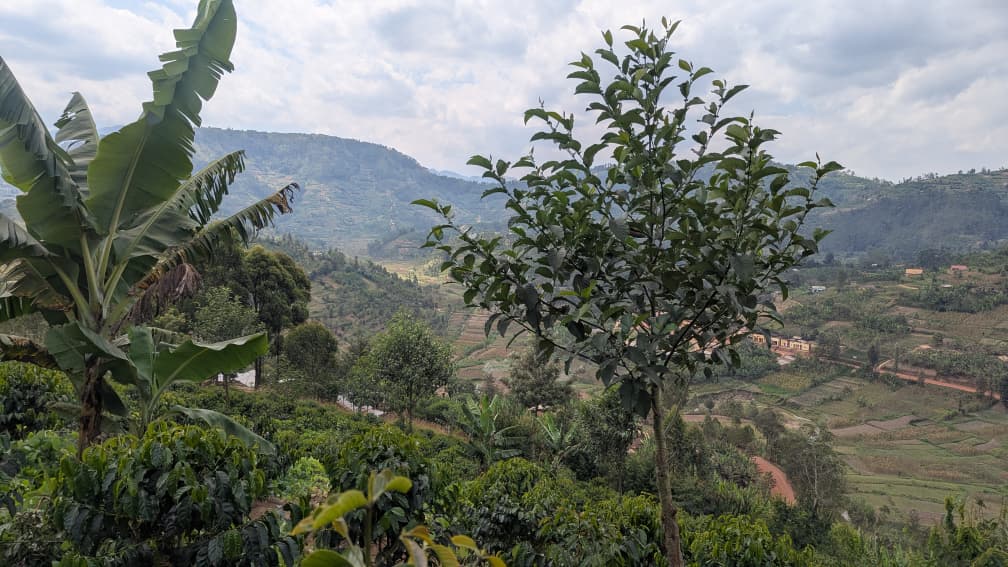
He further underscored the importance of agroforestry within coffee production systems, noting that integrating coffee with companion tree species delivers multiple ecological and economic benefits, including erosion control, wind protection, and enhanced coffee quality.
«”Trees intercropped with coffee substantially improve bean quality and cup characteristics. They mitigate soil erosion, reduce wind damage, contribute organic matter through leaf litter, and provide farmers with timber and staking materials for other crops. Coffee cultivated within diversified agroforestry systems consistently outperforms monoculture coffee in both quality and productivity.”»
According to Kanyetariki, integrating bananas and pumpkins into coffee fields further strengthens farming resilience by diversifying production and generating income throughout the year.
«”A farmer can harvest pumpkins and bananas while simultaneously obtaining livestock fodder, reducing expenditure on mulch, and ultimately producing high-quality coffee. Such integrated farming systems maximize land productivity and generate multiple streams of agricultural value from a single plot.”»
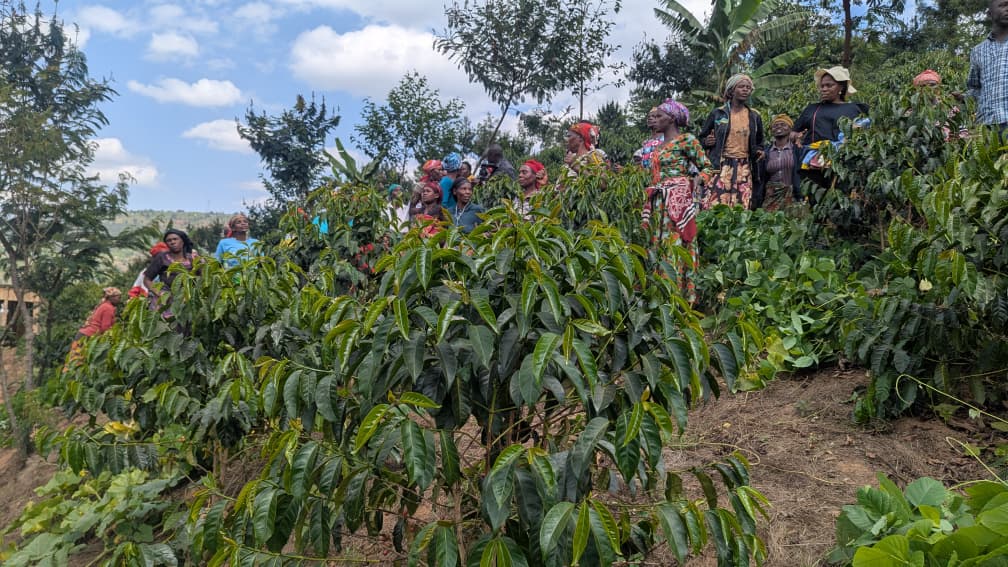
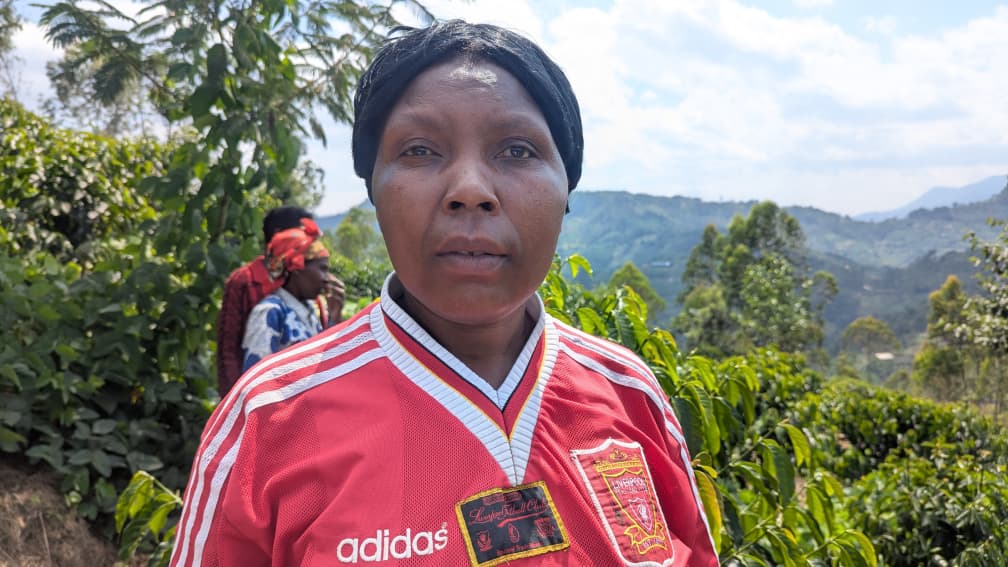
Jacqueline Nyirandimubanzi, President of the Hinga Kawa Association, which comprises 916 members operating under the Abakunda Kawa Rushashi Cooperative, affirmed that adopting Mucuna alongside diversified intercropping practices has significantly lowered production costs while improving soil fertility and household livelihoods.
«”The benefits derived from cultivating Mucuna have been substantial. We have considerably reduced expenditure on mulching materials and fertilizers, improved soil health, increased coffee yields, and strengthened household food security through the cultivation of complementary crops alongside coffee.”»
The farmers maintain that they intend to further scale up coffee production by expanding sustainable agricultural practices, thereby contributing to Rwanda’s broader ambition of increasing agricultural exports and enhancing the country’s foreign exchange earnings through high-quality coffee production.