“We now have skills that give us hope for a better future” — Women in Nyange applaud FROMGREEN
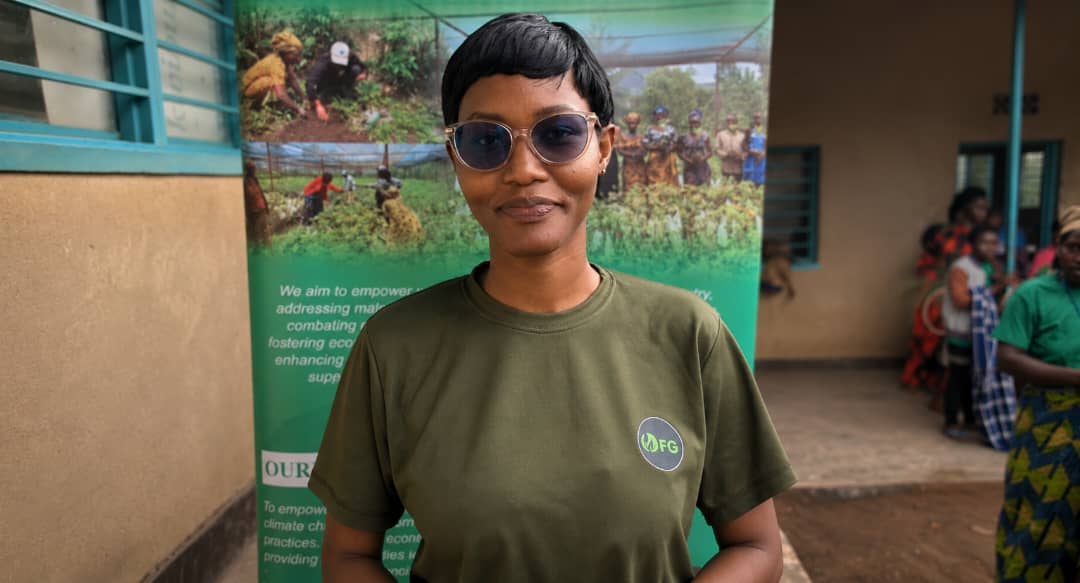
Women and girls who became mothers at a young age in Nyange Sector, Musanze District, say initiatives implemented by FROMGREEN have equipped them with practical skills and livelihood opportunities that are giving them renewed hope for a better future, while also enabling them to contribute to environmental conservation and climate action.
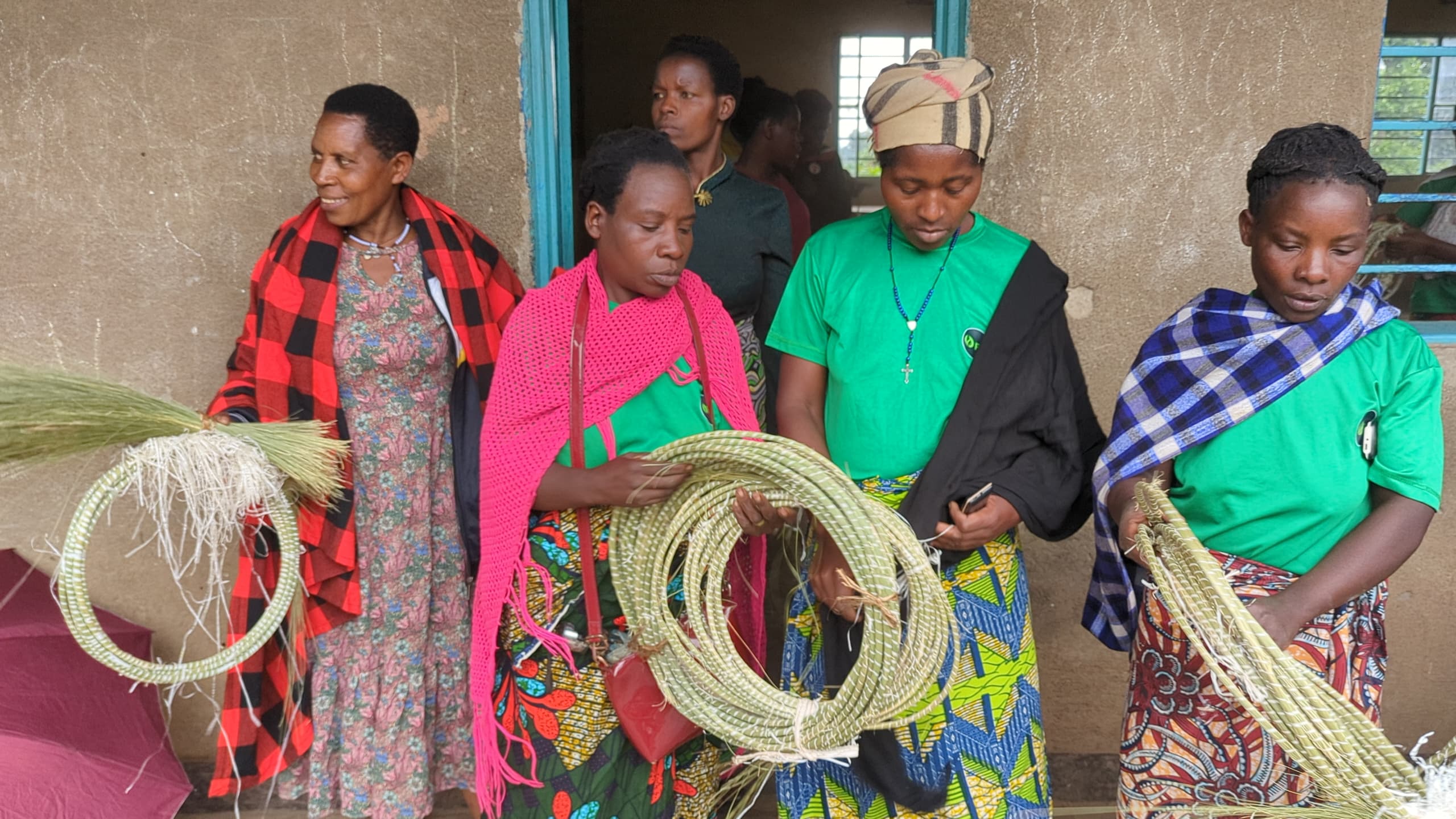
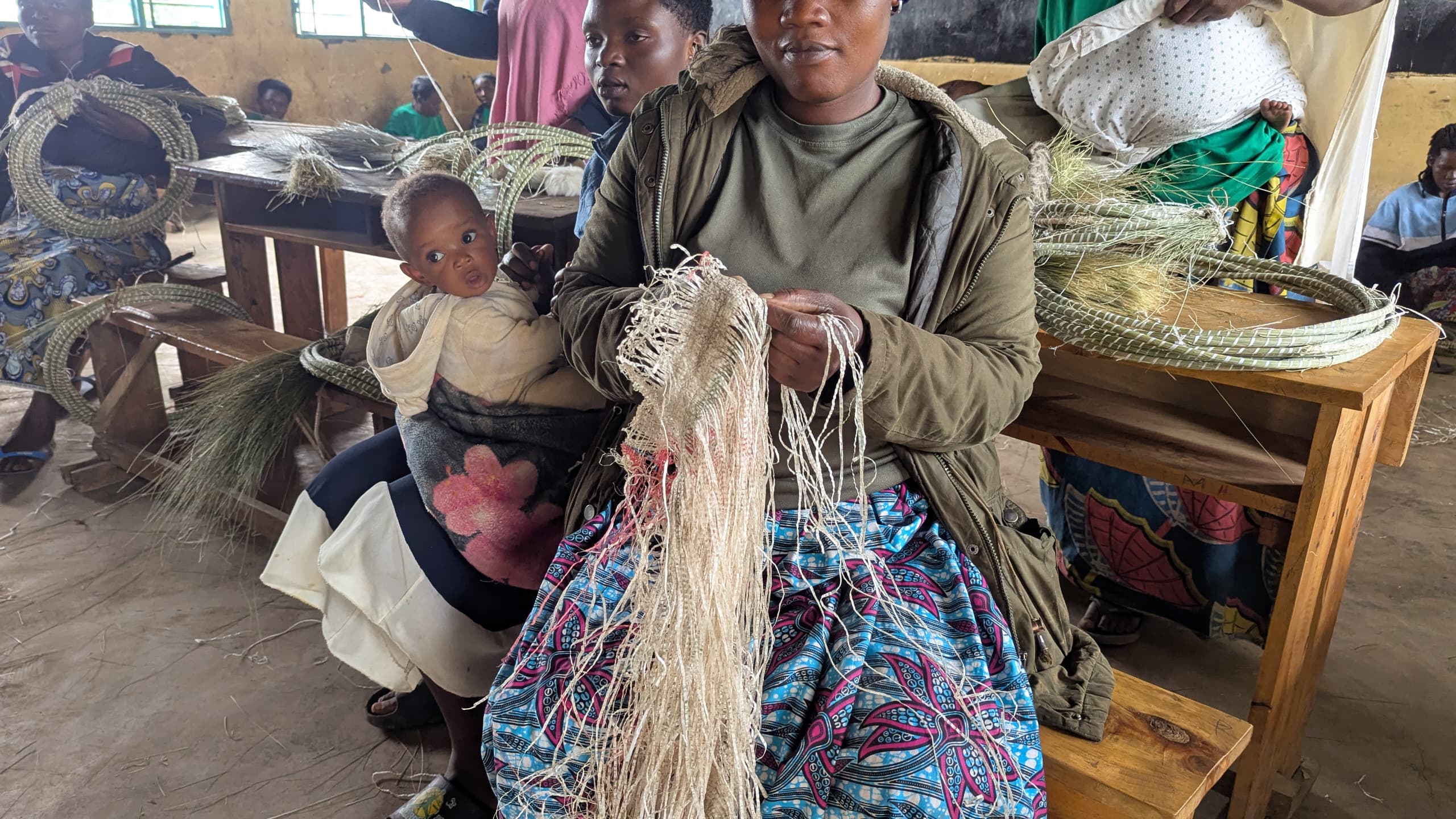
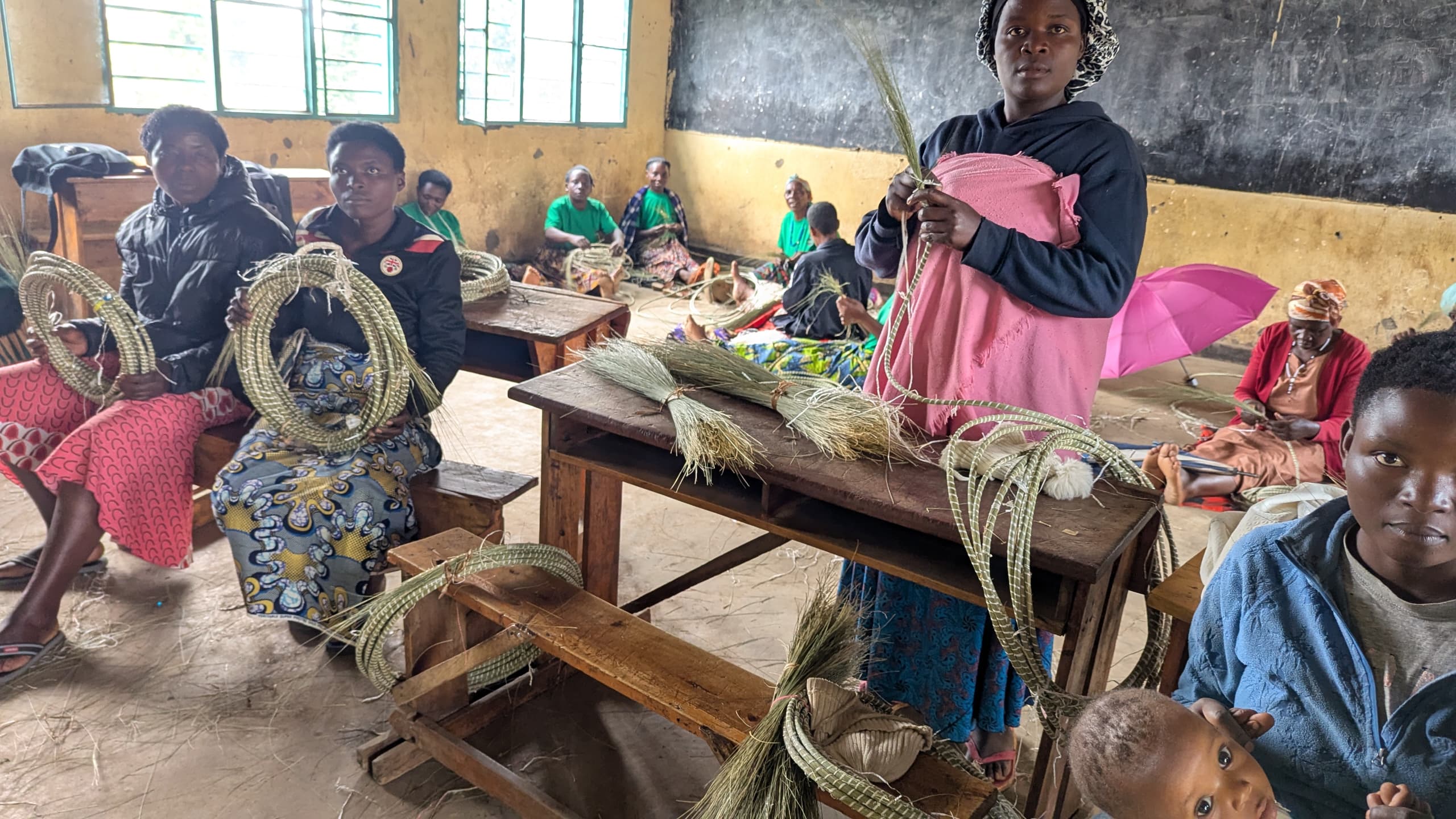
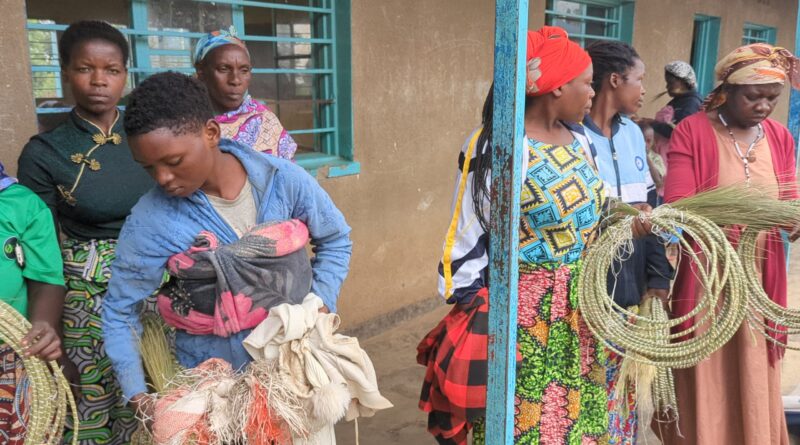
Through the project, women are being trained in various vocational skills aimed at helping them generate income and become self-reliant. They have recently started learning how to weave different handicrafts, including baskets made from locally available grasses.
The weaving initiative is part of FROMGREEN’s broader approach to linking women’s economic empowerment with environmental conservation. Alongside vocational training, participants are encouraged to plant trees, protect them and turn environmental resources into sustainable sources of livelihood.
Chantal Dusengimana, one of the women participating in the project, says the support she has received has helped her understand that environmental conservation can go hand in hand with household economic empowerment.
She said: “After joining the project, I planted an avocado tree, and it is now growing well. I was also given a sheep, which has already produced a male lamb. Today, we have also started learning how to weave baskets. We began the training with great enthusiasm because we believe that once we master these skills, they will greatly improve our livelihoods. We also hope to pass these skills on to others so that our knowledge can continue to grow.”
Chantal believes that learning basket weaving will give the women a practical activity they can engage in on a daily basis, enabling them to earn an income and address some of the challenges facing their households.
For the women involved, the initiative is about more than earning money. It is also helping to transform their mindset around entrepreneurship, savings, self-reliance and making productive use of available opportunities.
Vestine Nyirabariyanga, another participant, says the project has taught them valuable lessons about saving and setting long-term goals. She says they are also committed to multiplying the benefits of the livestock they have received.
“The project has taught us the importance of saving and setting goals for ourselves. Giving each member a sheep has encouraged us to think about the future and look for ways to improve our livelihoods,” Vestine said.
The women also believe that vocational training can provide a second chance for young people, particularly girls who have dropped out of school or become mothers at a young age. By acquiring practical skills, they can engage in productive activities and build livelihoods rather than being left without opportunities or a clear direction for their future.
FROMGREEN says empowering girls who became mothers at a young age, particularly those living in rural communities, with practical skills is one way of strengthening their ability to provide for their children and rebuild confidence within their families and communities.
Immaculee Namahirwe, Director of FROMGREEN Rwanda, says basket weaving was introduced to provide women with a source of income they can rely on while waiting for returns from longer-term livelihood activities, including avocado trees and livestock.
“Avocado trees take time before they begin producing fruit, and sheep also take time to reproduce. That is why we introduced activities that can enable these women to generate income in the short term. By equipping them with weaving skills, we are giving them an opportunity to engage in productive work every day and earn money to meet different household needs,” Immaculee said.
She added that FROMGREEN places women at the centre of environmental protection and climate action because environmental degradation and the impacts of climate change can disproportionately increase the workload carried by women, particularly through household responsibilities, food preparation, childcare and agricultural activities.
FROMGREEN Rwanda is a non-governmental organisation operating in Rwanda, particularly in Musanze District, with a focus on women’s empowerment, environmental conservation and sustainable livelihoods. Its initiatives include promoting agroforestry through activities such as planting avocado trees and helping communities turn environmental stewardship into economic opportunities.
The women in Nyange say the project has helped them understand that protecting the environment can also contribute to improving household livelihoods. They see tree planting, livestock rearing, saving and vocational training as complementary pathways towards greater economic resilience and sustainable development.
For girls who became mothers at a young age, the participants believe that access to practical skills can strengthen their ability to care for their children, earn an income and regain confidence, particularly when they are given opportunities to engage in productive economic activities.
Immaculee believes that equipping women with knowledge, practical skills and opportunities for entrepreneurship is also an effective way of making them stronger partners in environmental conservation.
“When a woman has the knowledge and capacity to improve her livelihood, she is also better positioned to contribute to environmental protection and help her family cope with the impacts of climate change,” she said.
This approach reflects growing recognition in Rwanda that women can play a significant role in climate action and sustainable development when they have access to knowledge, resources and meaningful opportunities to participate in environmental initiatives.
For the women of Nyange, the ambition is for the skills they are acquiring to extend beyond the current group, enabling them not only to improve their own livelihoods but also to share their knowledge with others.
As they put it: “Learning a skill gives us an opportunity to become productive and self-reliant; protecting the environment means investing in our future. When the two are brought together, women can improve their livelihoods while safeguarding the environment for their families and the generations to come.”