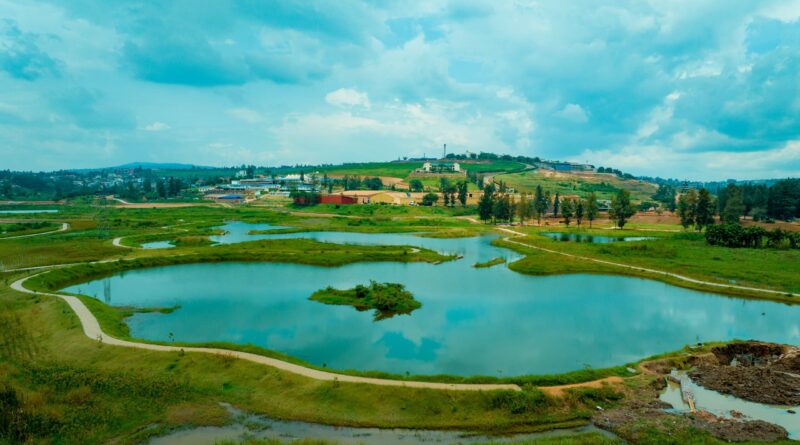
Kibumba wetland poised to become Kigali’s premier hub for aquaculture and nature-based tourism
The Rwanda Environment Management Authority (REMA) has announced that the ongoing ecological restoration of Kibumba Wetland will establish it as a flagship destination for aquaculture, eco-recreation, and biodiversity conservation, setting it apart from the four other wetlands currently undergoing rehabilitation within the City of Kigali.
The ambitious initiative is expected to significantly enhance environmental sustainability, climate resilience, and nature-based tourism while providing residents with world-class recreational amenities.
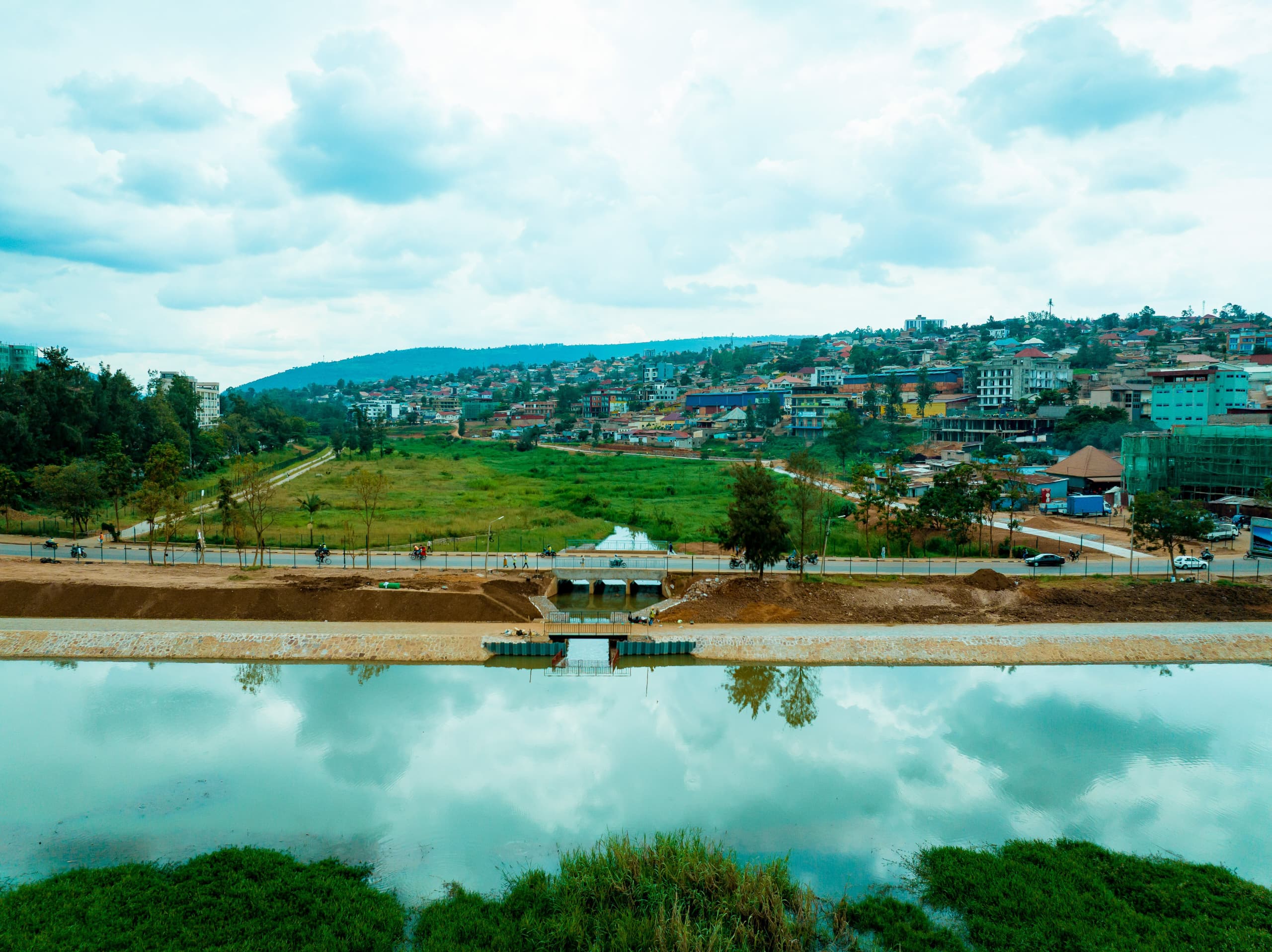
Occupying approximately 68 hectares on the former UTEXRWA industrial site, Kibumba Wetland stretches across the sectors of Kinyinya and Gisozi.
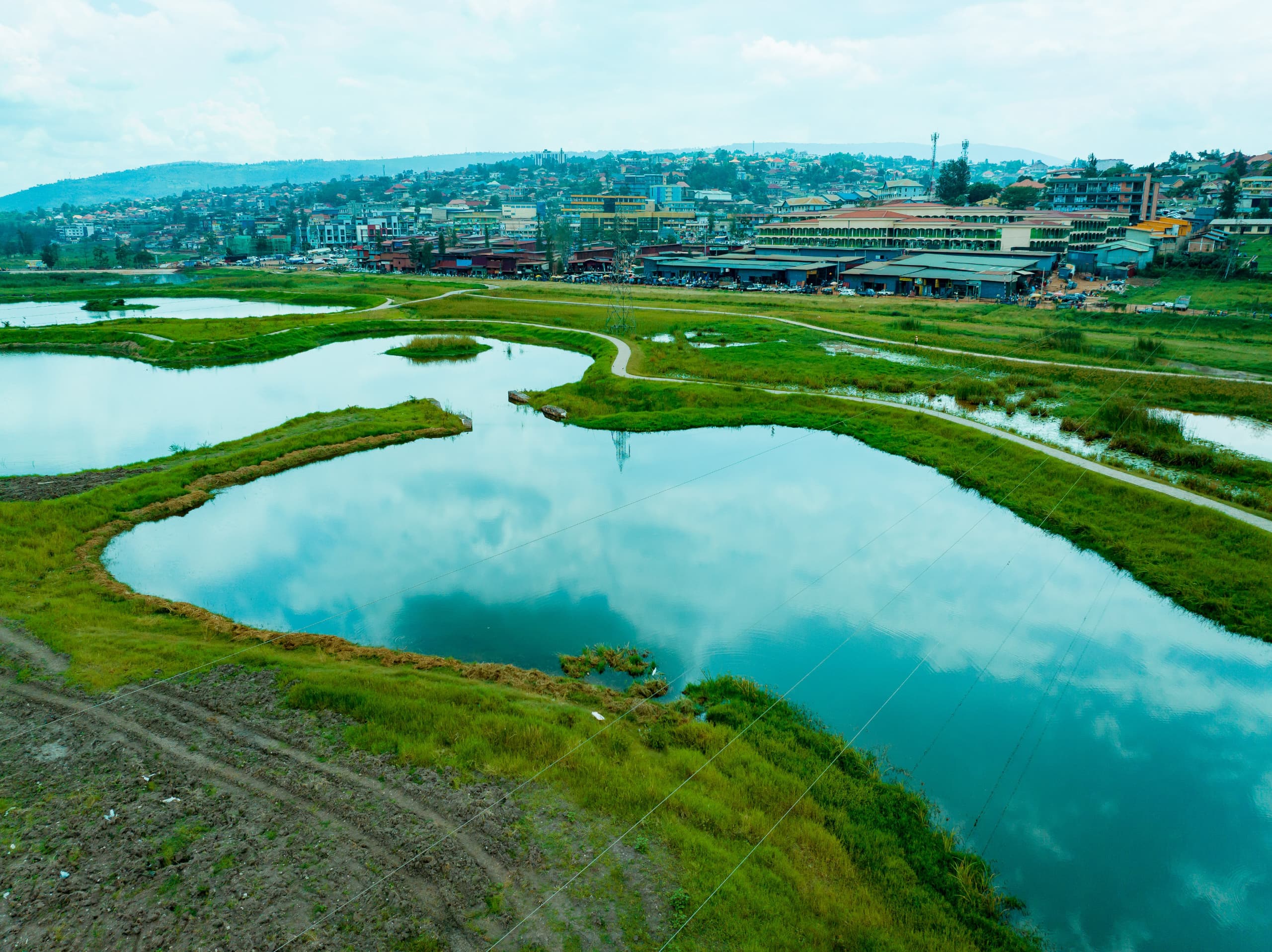
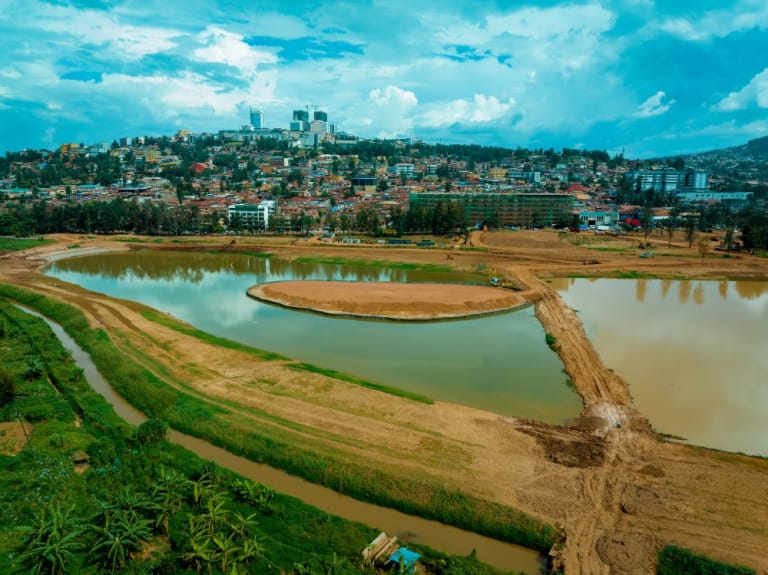
The restoration master plan designates the wetland primarily for aquaculture development, incorporating a series of interconnected fish ponds engineered to support sustainable fish farming.
The project will also feature landscaped botanical gardens alongside a modern interpretation centre dedicated to showcasing the historical evolution and contemporary development of Rwanda’s fisheries and aquaculture sector.
The wetland will further incorporate strategically designed retention basins intended to attenuate urban flooding and improve hydrological regulation across the surrounding catchment.
Recreational gardens and ecological learning spaces will offer visitors tranquil environments for relaxation, environmental education, and immersive interaction with the natural ecosystem.
These integrated facilities will position Kibumba Wetland as Rwanda’s foremost centre for aquaculture-based ecotourism.
Kibumba Wetland forms part of an extensive urban ecological restoration programme jointly implemented by the City of Kigali and REMA, encompassing five major wetlands across the capital.
The remaining restoration sites include Gikondo, Rugenge–Rwintare, Nyabugogo, and Rwampara, each assigned a specialised ecological function aimed at maximising environmental, social, and economic value.
Covering 162 hectares, Gikondo Wetland is being transformed into an internationally competitive ecotourism destination featuring approximately 16.9 kilometres of pedestrian promenades and cycling corridors that will enable visitors to experience the area’s exceptional biodiversity and scenic landscapes.
Meanwhile, Nyabugogo Wetland, extending over 131 hectares, is being developed into a national centre for biodiversity research, ecological monitoring, and environmental education.
Construction has progressed at a relatively slower pace due to the incorporation of an artificial lake within the restoration scheme.
Rwampara Wetland, occupying 65 hectares, commenced restoration in November 2024, several months after the other wetlands, whose rehabilitation began in March 2024. Upon completion, it will feature approximately 10 kilometres of dedicated pedestrian and cycling infrastructure.
Likewise, Rugenge–Rwintare Wetland, also spanning 65 hectares, extends between Kacyiru and Muhima, connecting with Muhima Wetland near Kinamba.
The site will include an extensive 15.5-kilometre network of non-motorised transport corridors designed to encourage sustainable urban mobility.
Despite their distinct thematic specialisations, all five wetlands pursue common strategic objectives: mitigating urban flooding, conserving biodiversity, naturally filtering stormwater and surface runoff, and creating high-quality green public spaces for recreation, physical activity, and environmental appreciation. Collectively, the developments will provide approximately 61.5 kilometres of pedestrian walkways and cycling paths.
As part of the project’s comprehensive environmental management strategy, advanced stormwater management systems have been incorporated to separate runoff from solid waste originating in adjacent settlements and surrounding catchments. Sophisticated filtration infrastructure will intercept sediments and pollutants before water enters the restored wetland ecosystems, thereby safeguarding ecological integrity and improving water quality.
The wetland restoration programme was officially inaugurated in January 2024 and has now surpassed 90 percent completion. Construction activities are scheduled for full completion by August 2026.
Together, the five wetlands encompass approximately 491 hectares, with the Government of Rwanda investing more than RWF 100 billion in their restoration and sustainable development.
This landmark investment represents one of Kigali’s most transformative green infrastructure initiatives, fundamentally reshaping the city’s environmental landscape, strengthening climate adaptation and resilience, promoting biodiversity conservation, expanding nature-based tourism opportunities, and providing residents with safe, aesthetically distinguished, and ecologically sustainable public spaces for recreation, wellness, and environmental engagement.