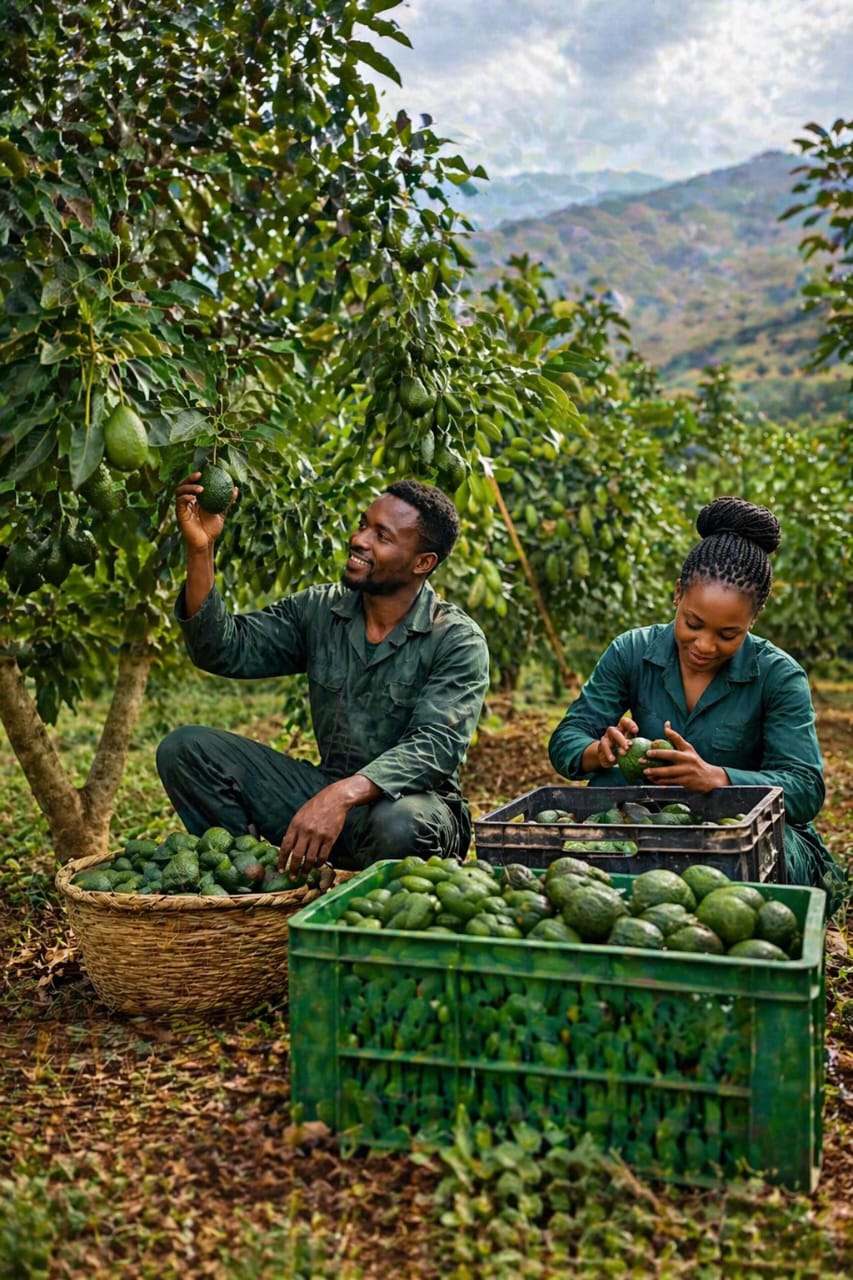
🌿 Sustainable Avocado Farming in Rwanda: From Orchard Management to Market Value Creation 🥑
Avocado (Persea americana) has become one of the most valuable fruit crops in modern agriculture due to its high nutritional value, strong market demand, and environmental benefits. In Rwanda and across many parts of Africa, avocado farming is increasingly seen as a pathway to improving rural livelihoods while promoting sustainable land use.
However, achieving high-quality and profitable avocado production requires more than just planting trees. It demands a complete system of good agricultural practices, careful orchard management, and responsible post-harvest handling.
🌱 1. Building a Strong Foundation: Orchard Establishment
Successful avocado farming begins with proper site selection and orchard design.
Soil selection: Avocado trees thrive in well-drained, fertile soils. Waterlogged soils should be avoided as they increase the risk of root diseases.
Spacing: Proper spacing between trees is essential to reduce competition for nutrients, water, and sunlight, while allowing trees to grow to their full potential.
Variety selection: Choosing improved and market-preferred varieties increases productivity and market competitiveness.
A well-planned orchard ensures long-term productivity and reduces future management costs.
🌿 2. Good Agricultural Practices for High Yields
To achieve consistent and high-quality production, farmers must adopt improved management practices:
🌧️ Irrigation and Water Management
Avocado trees require sufficient water, especially during dry seasons. Proper irrigation ensures healthy fruit development and reduces fruit drop.
✂️ Pruning and Tree Management
Regular pruning improves sunlight penetration and air circulation within the canopy. This reduces disease risks and enhances fruit quality and size.
🌿 Soil Fertility Management
The use of organic manure and balanced fertilizers improves soil health and ensures sustainable production over time.
🐛 Pest and Disease Control
Integrated pest management (IPM) methods are encouraged to reduce crop losses while protecting the environment.
🌾 3. Harvesting and Post-Harvest Handling
Quality avocado production does not end in the field. Post-harvest handling plays a critical role in determining market value.
Timely harvesting: Avocados must be harvested at the correct maturity stage to ensure good ripening and taste.
Careful handling: Fruits should be picked and transported carefully to avoid bruising and physical damage.
Sorting and grading: Sorting helps separate high-quality fruits from damaged ones, improving market pricing.
Proper packaging: Using clean and ventilated containers helps maintain freshness during transportation.
Good post-harvest practices significantly reduce losses and increase farmers’ income.
🌍 4. Economic and Environmental Benefits
Avocado farming provides multiple benefits at both household and national levels:
✔ Income generation: High demand in local and international markets creates strong income opportunities for farmers.
✔ Food and nutrition security: Avocados are rich in healthy fats, vitamins, and minerals.
✔ Environmental conservation: Avocado trees help reduce soil erosion, improve soil structure, and contribute to greener landscapes.
✔ Climate resilience: Diversified farming systems including avocado contribute to climate-smart agriculture.
🚜 5. Towards Sustainable and Inclusive Agriculture
The future of avocado farming depends on collaboration, knowledge sharing, and innovation. Farmers are encouraged to:
Join cooperatives to access better markets
Participate in agricultural training programs
Adopt climate-smart and agroecological farming methods
Invest in quality production rather than quantity alone
🌿 Conclusion
Sustainable avocado farming is not only about increasing yields but also about building resilient farming systems that protect the environment and improve livelihoods. When farmers apply good practices from orchard establishment to market delivery, they unlock long-term economic and ecological benefits.
Avocado farming, when done sustainably, becomes a powerful tool for rural transformation, food security, and environmental protection.