
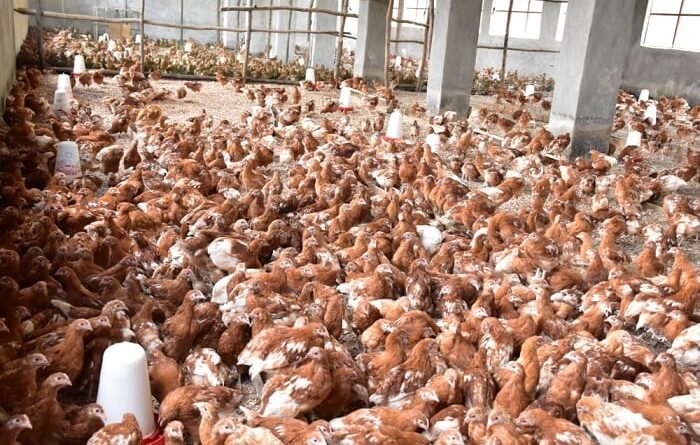
Rwanda Shifts Focus to Poultry Farming to Boost Meat Production
The Ministry of Agriculture and Animal Resources has announced plans to strengthen poultry farming so that chicken becomes the most widely consumed meat in Rwanda. The decision is based on the fact that chickens reproduce quickly, require relatively small land space, and demand less investment compared to larger livestock.
Currently, more than 13 million chickens from nine different breeds are reared across the country. These include egg-laying breeds, broilers raised specifically for meat, and dual-purpose breeds that provide both eggs and meat.
Rwanda also has professional poultry farmers, including Absol Ltd, a company located in Bugesera District. The company keeps about 130,000 laying hens, producing no fewer than 80,000 eggs per day, helping increase access to animal-based protein for Rwandans.
IRUNGA Amuli, the company’s head of sales and operations, said:“Poultry farming is an activity that can sustain individuals, support the country, and benefit everyone,whether through selling its products or improving child nutrition in the fight against stunting. Chickens also produce high-quality manure compared to other livestock. We see poultry as one of the key pillars that can drive national development, improve livelihoods, health, and the economy.”
In 2025, Rwanda produced more than 219 million kilograms of meat, with over 62 million kilograms coming from poultry.
However, the Ministry notes that this production is still insufficient, as most Rwandans consume meat only once a week on average. The goal is to increase overall meat consumption, with chicken making up a larger share.
Dr. Ndorimana Jean Claude, Director General in charge of Animal Resources Development at the Ministry, explained:
“In our planning, poultry should account for at least 30% of the meat consumed in the country. Fish will also play a growing role, as will pork. Beef, however, may become more occasional, mainly due to limited land availability. Cattle farming is not feasible for everyone, and we primarily rely on cows for milk production.”
He added that Rwanda intends to prioritize short-cycle livestock, as they require lower investment and reach market readiness faster compared to cattle.
Challenges facing poultry farmers include access to quality chicks,since some are still imported and the high cost of feed. The Ministry says it is working to address these issues.
Dr. Ndorimana emphasized:“To succeed in livestock farming, you need quality breeds, good feed, and proper knowledge. We have programs to continue training farmers, and the government will keep supporting access to improved breeds. Although feed remains expensive largely because manufacturers compete for maize and other raw materials,we aim to collaborate further to lower production costs. We are also working with private partners to ensure that essential supplies such as vaccines and veterinary medicines are consistently available in the country.”
Beef remains the most consumed meat in Rwanda, accounting for 34% of total meat production in 2025. However, the Ministry plans to gradually shift daily meat consumption toward chicken, fish, and other short-cycle livestock, while focusing cattle farming more on increasing milk production rather than meat supply.
Rwanda currently has nine animal feed processing plants and seven professional hatcheries. The Ministry has also begun research on improving indigenous chicken breeds to develop a dual-purpose variety that is both productive and cost-efficient.