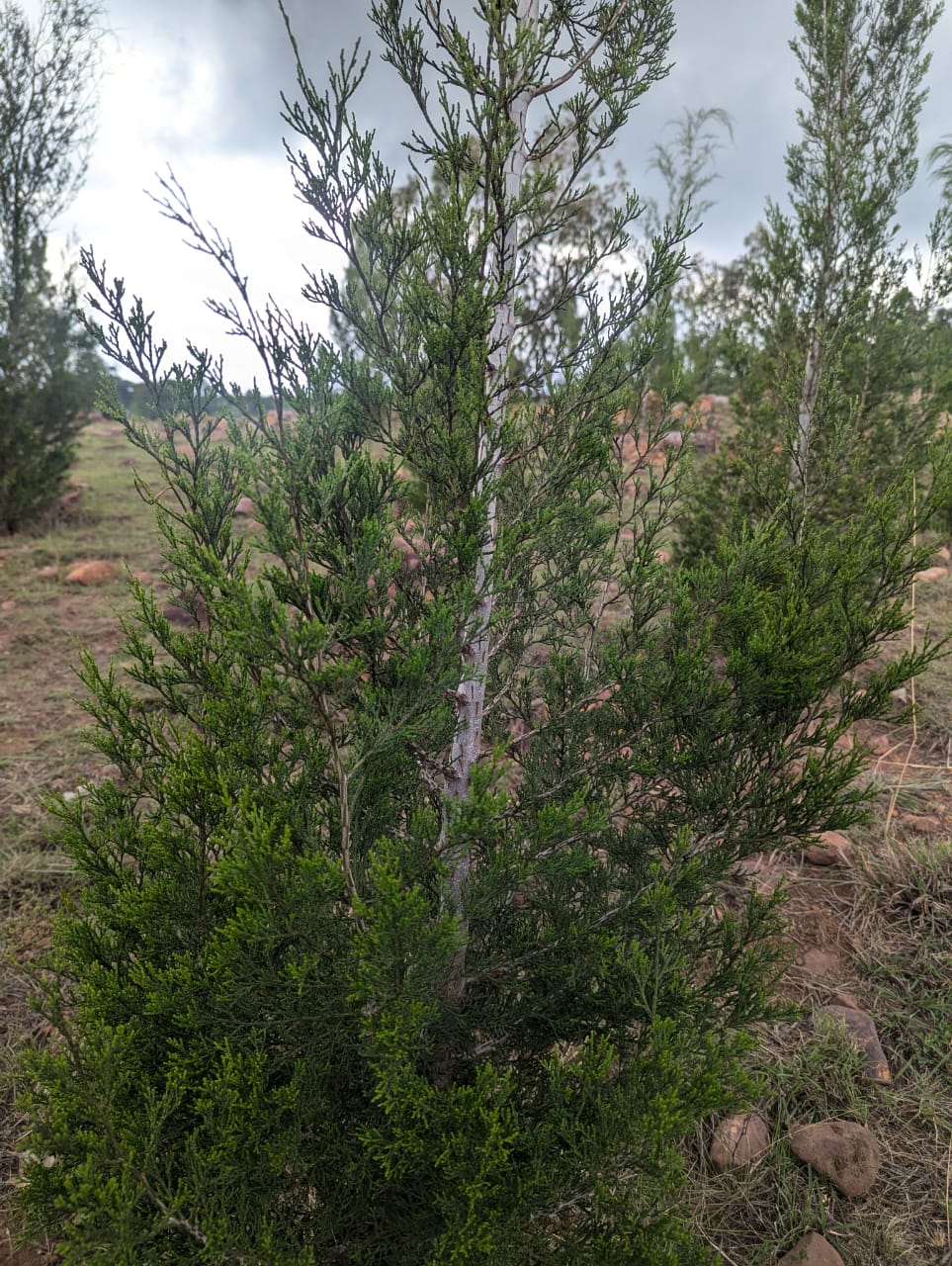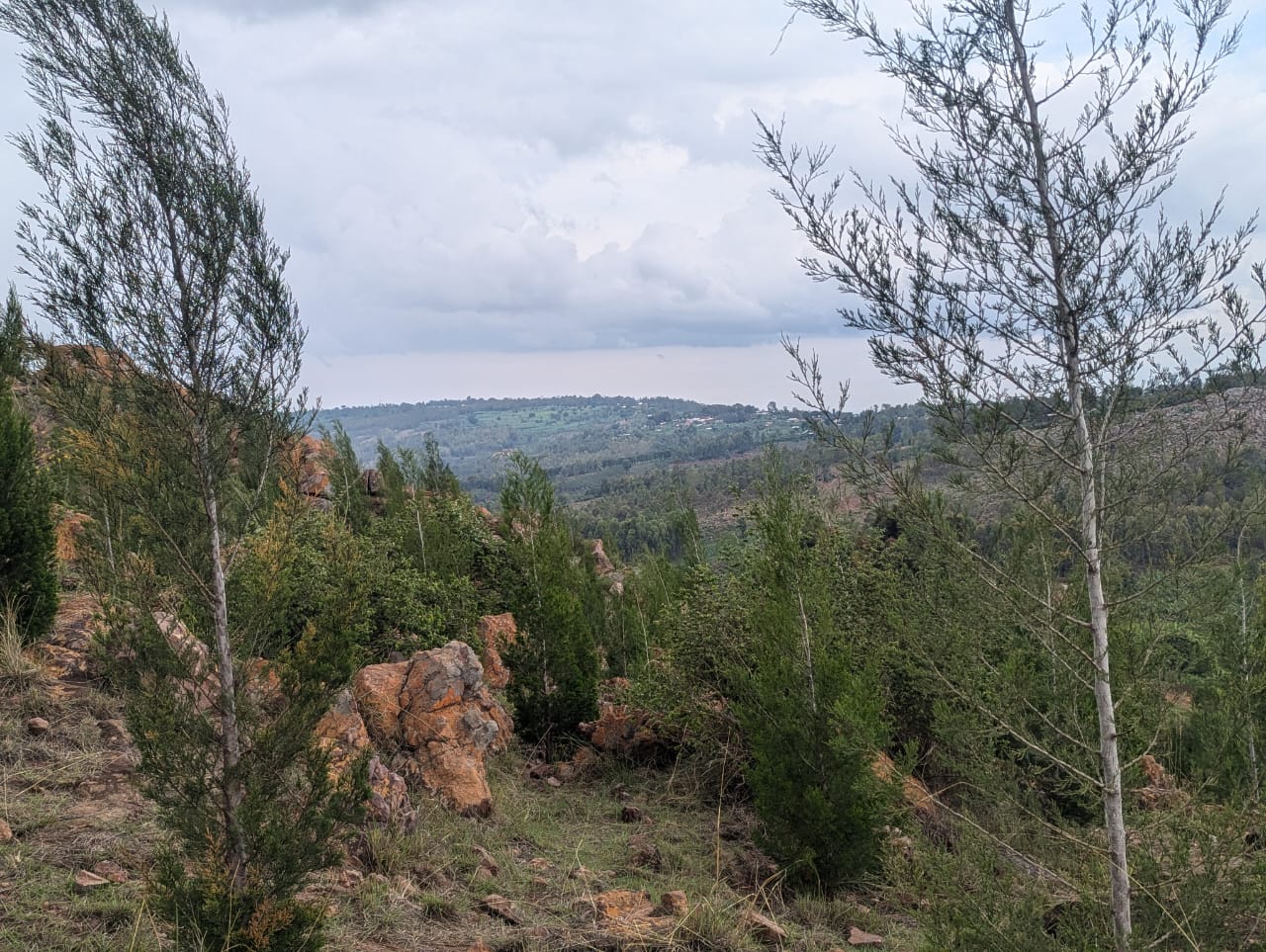
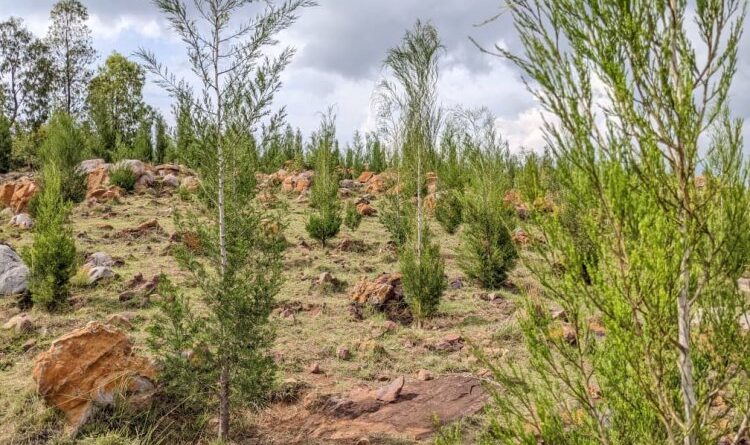
REMA, through the NAP project, showcases the unique power of Calitris trees in restoring rocky and degraded landscapes
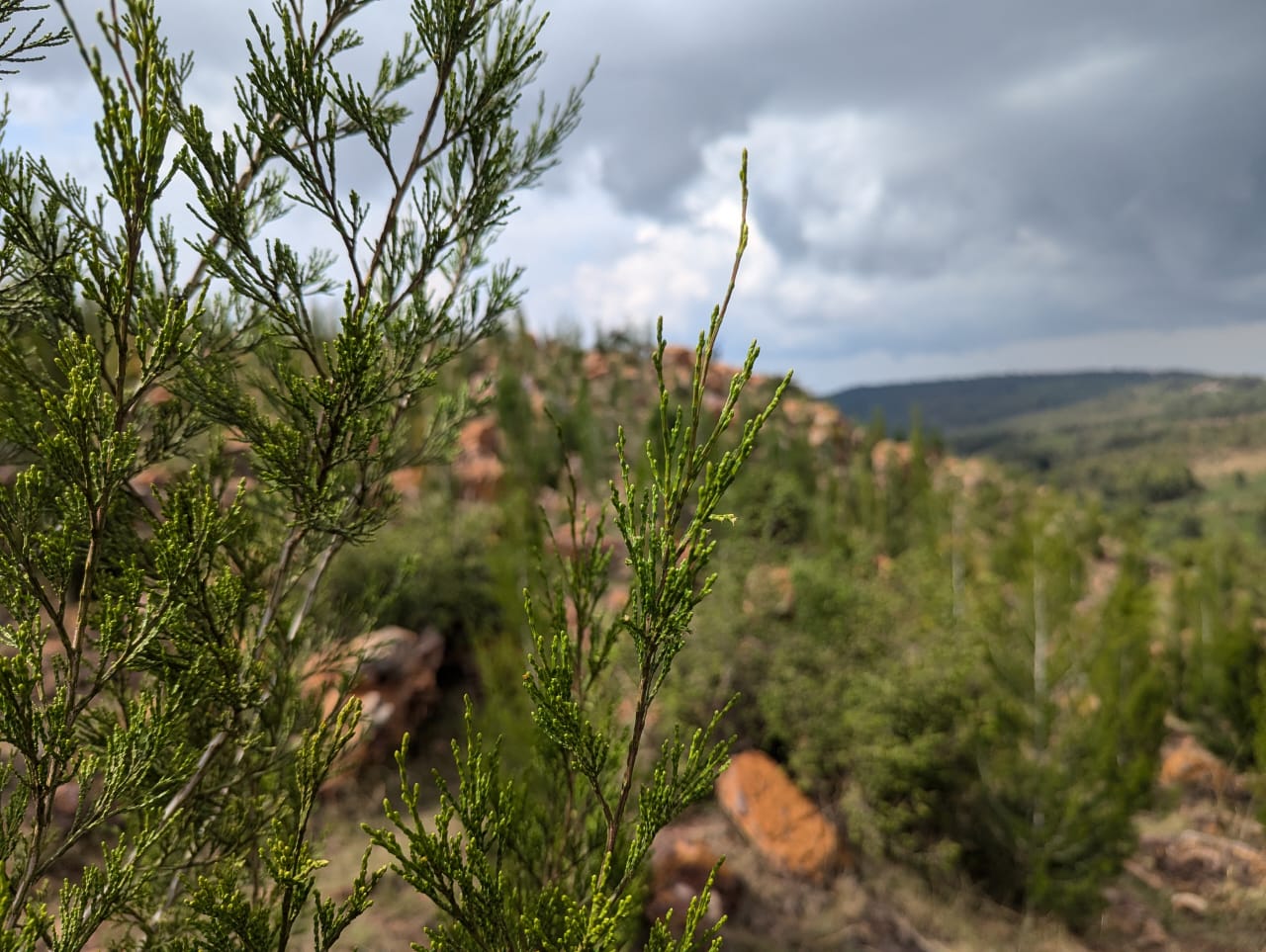
The Rwanda Environment Management Authority (REMA), in collaboration with the NAP project, continues to expand efforts to plant trees that help combat climate change, including agroforestry species that restore soil health and support biodiversity across affected landscapes. Among these species, Calitris trees have demonstrated exceptional resilience in rocky terrains, surviving harsh sunlight and thriving where other trees cannot.
Over 1,400 hectares across the sectors of Mpanga, Nasho, and Kigina have been planted with these trees, targeting areas previously devastated by extreme heat and prolonged dry conditions. Calitris trees are helping to restore ecological balance by improving soil structure, purifying the air, and offering socioeconomic benefits to surrounding communities.
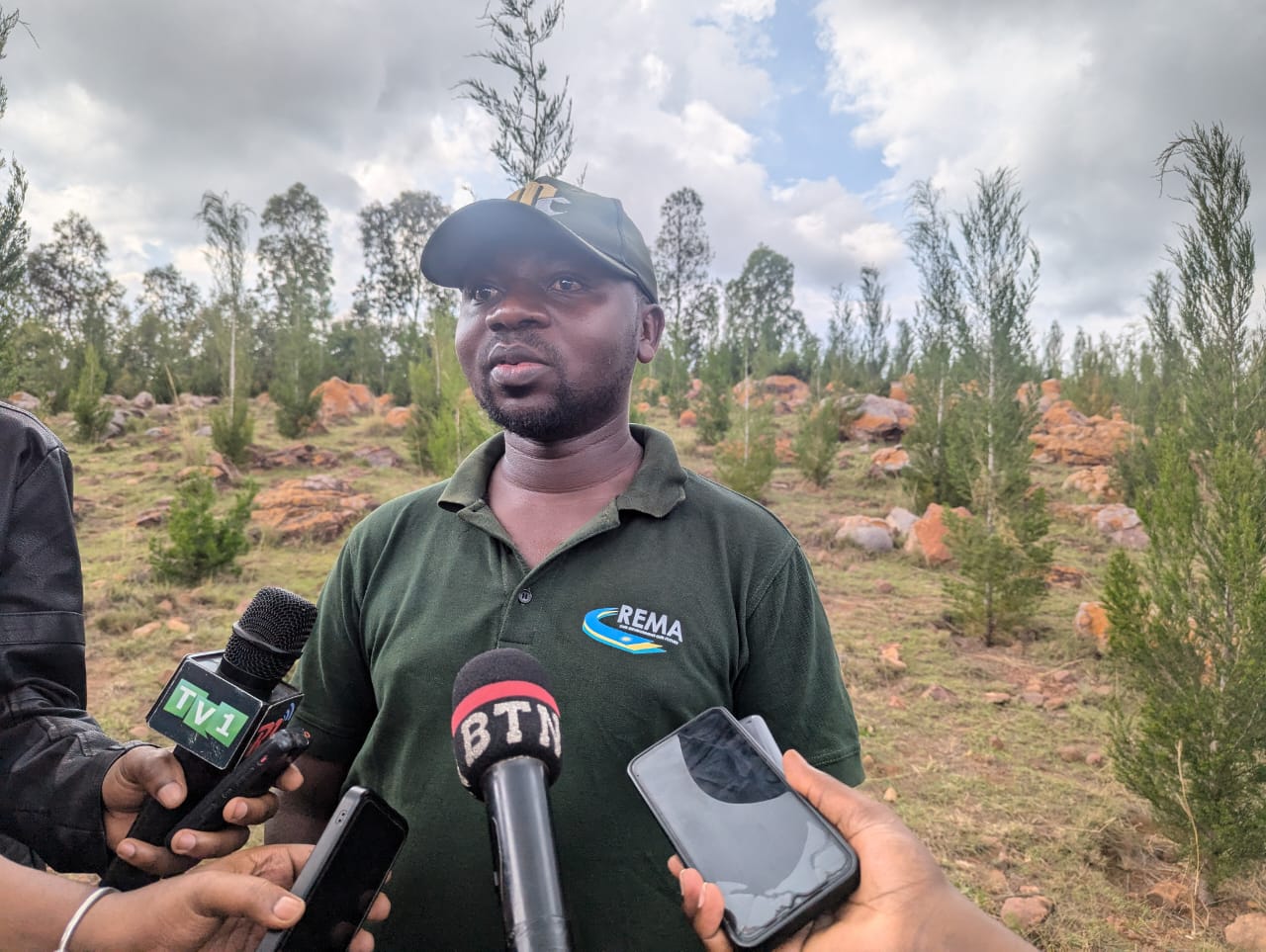
Cyprien Ngendahimana,a Communications Specialist at REMA, explains that planting Calitris contributes significantly to strengthening climate resilience and restoring unproductive land,while improving daily life for local residents.
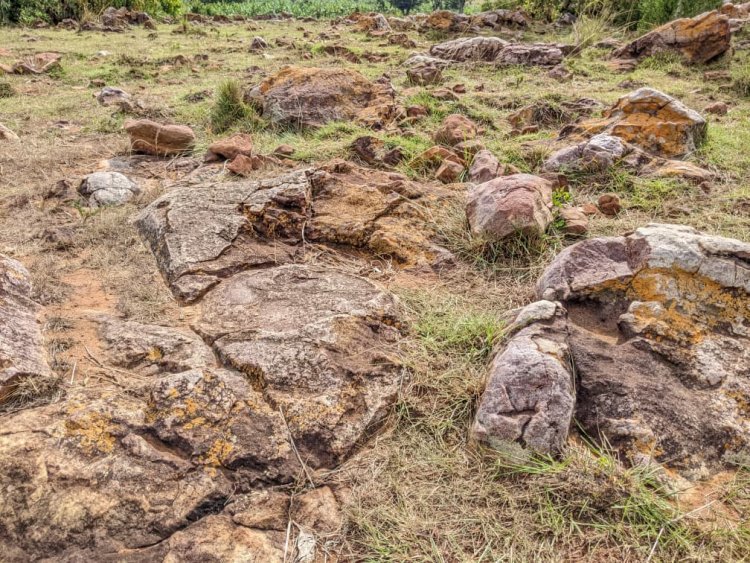
He says: “As you can see, this area was once nothing but bare rock. Many believed that no life could grow here. But Calitris trees prove that even rocky hillsides can regenerate and support vegetation. This gives hope for our broader climate resilience strategies and demonstrates the potential of turning stony land into productive ecosystems.”
Ngendahimana adds that, in addition to planting Calitris, the NAP project has also expanded agroforestry initiatives, integrating trees with crops in farmers’ fields.
“Planting Calitris aligns with the project’s core objectives. Alongside the rehabilitation of degraded forests, we have planted agroforestry species in farmers’ fields. This long-term process helps control soil erosion, restore soil fertility, reduce drought and wind damage, and purify the air,” he noted.
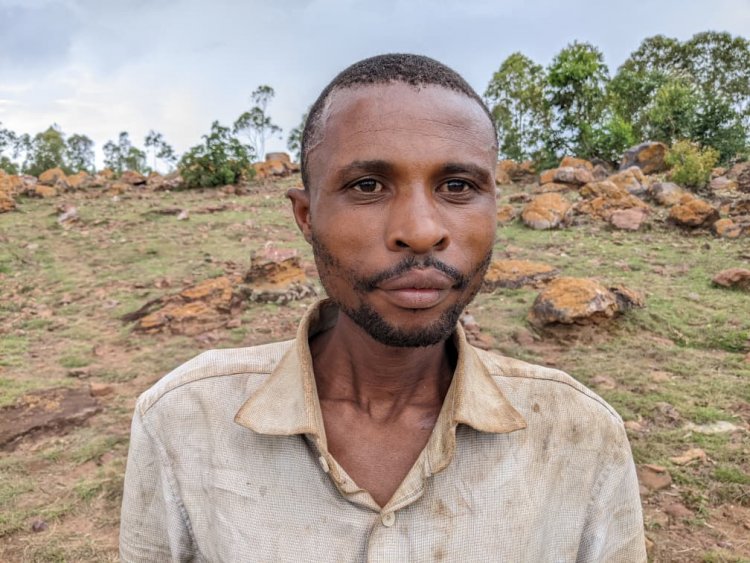
Eric Ganza, a resident of Mpanga Sector—one of the areas where Calitris trees were planted,said the experience has completely changed their understanding of land potential.
He explains: “We used to believe nothing could grow here because it’s all rocky slabs. But after seeing these trees grow successfully, it is clear that no land is useless. We are now committed to tree planting, and the project continues to support us in doing so.”
Ngendahimana further highlights that the areas planted with Calitris have also gained aesthetic value, making them potential tourist attractions.
“While our goal is environmental protection, the beauty created by these trees is remarkable. The combination of Calitris and rock formations gives the hills a natural decorative look,” he said.
Calitris trees play a crucial role in stabilizing rocky soils. Their deep, penetrating roots anchor into crevices, reducing the risk of landslides and erosion. They endure high temperatures and dry soils, giving them exceptional ability to grow in places where conventional trees fail.
Beyond soil stabilization, Calitris contributes to cleaner air through natural compounds known as phytoncides, which help reduce dust and improve air quality. The trees also provide moderate shade and contribute to microclimate regulation, enhancing natural soil fertility.
The NAP project, now in its fifth and final year, aims to strengthen community resilience to climate-related impacts by restoring degraded landscapes and proving that even the harshest environments can be rehabilitated through strategic tree planting.
At the national level, Rwanda has made remarkable progress in expanding its forest cover, according to recent data from the Rwanda Forestry Authority (RFA). The country currently has approximately 724,695 hectares of forest, representing 30.4% of its total land area. Of this, 53.5% are planted forests, 18.1% are natural forests, 22.3% are wooded savannah, and 6.1% consist of shrubs and small vegetation.
These figures confirm that Rwanda has achieved its national and international commitment of reaching 30% forest cover, as pledged under the Bonn Challenge. RFA continues to lead national efforts to plant trees, restore degraded lands, and ensure sustainable forest management to improve air quality, protect soils, and support green economic development.
This national reforestation drive aligns strongly with the country’s NST2 (National Strategy for Transformation), which places environmental sustainability and climate resilience at the center of Rwanda’s long-term development. Through initiatives like the NAP project and the expansion of strategic tree species such as Calitris, Rwanda is strengthening its ecological systems and building a sustainable future for its citizens.