How technology and scientific research have enhanced the level of elephant conservation in Akagera NP
Akagera National Park is one of Rwanda’s most important tourism and conservation areas. It is renowned for its scenic hills, lakes, and wetlands, as well as for the diverse wildlife it hosts, including elephants one of the species that attracts the largest number of tourists.
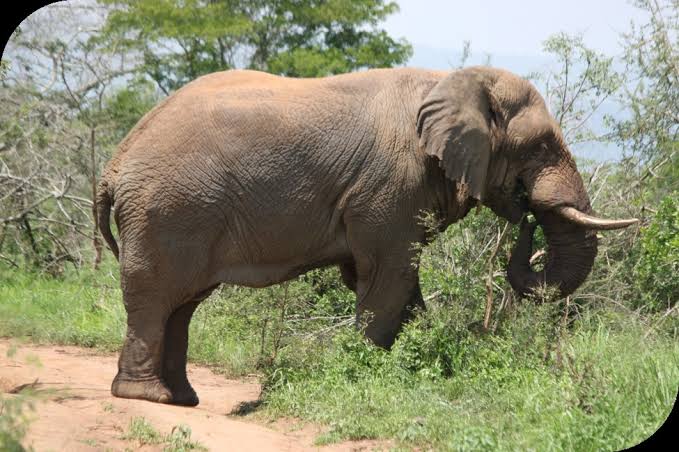
The elephants found in Akagera National Park belong to the African Bush Elephant (African Savanna Elephant), the largest and heaviest land animals on Earth. A fully grown elephant can weigh between over 3,500 and 6,500 kilograms.
Emelance Tuyipfukamire , a member of the wildlife research team specializing in elephants at Akagera National Park (Research Support), explains that elephants have a unique status within the park and are among the five large animals that most attract tourists.
She says:“Elephants have the special distinction of being one of the Big Five species, which are considered a symbol of the park. They also play a major role in forest engineering, because when they break or uproot trees, this helps smaller animals such as Zebra, antelopes, and other herbivores to access vegetation more easily.”
She further explains that although elephants may appear to destroy trees, in reality they play a critical role in increasing tree diversity.
“When elephants uproot trees, the seeds are scattered in different areas and grow again elsewhere. This allows the forest to develop a greater diversity of tree species, rather than remaining limited to only a few,” she explains.
Elephants are also known for their high intelligence and exceptional long-term memory.
Emelance notes:“Elephants have a remarkable ability to think and remember. They can recall the location of a water source or lake where they drank many years ago, and they are able to return there even after traveling many kilometers.”
Regarding reproduction, elephants reproduce slowly because they take a long time to reach maturity.
Emelance adds:“An elephant calf is born after a 22-month gestation period. Females can start reproducing at around 10 years of age, while males usually begin between 13 and 15 years. Once a male reaches sexual maturity, it leaves the family group to live alone or with other males, while females remain within the family.”
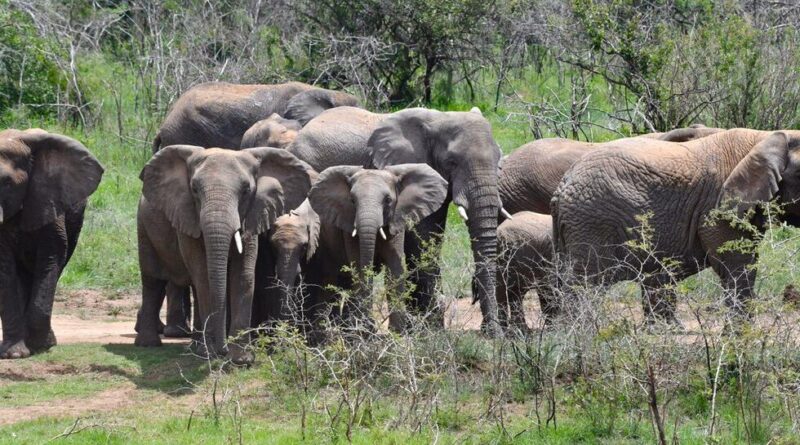
Currently, Akagera National Park is home to more than 142 elephants, of which 92 are individually identified.
Emelance explains:“We have a special identification system (database). We use photographs to identify each elephant based on ear notches, tusk shape, size, and whether it is male or female. By combining these features, we can recognize each individual elephant. In our database, we have 92 identified elephants, including 53 females and 39 males.”
She adds that collecting data on elephants is an ongoing project, with the goal that eventually all elephants in the park will be registered in the database.
On the role of technology, Emelance highlights that it has become a sustainable solution for monitoring elephants.
She says:“Here in the park, we have a project where we fit animals especially key species with tracking collars that help us know their location. When an elephant wears a collar, it sends location data based on the system’s settings, sometimes as often as every hour, to the control room.”
She continues:“When we go to the field based on that information, the elephant may no longer be there. However, we estimate its direction of movement by examining dung, footprints, and other signs. We take photographs that help us identify the elephant using ear notches, tusks, and other features stored in our database. This also allows us to add new elephants and update existing records.”
In forest regeneration, elephant dung is considered a natural factory for producing diverse tree species.
Emelance explains:“Elephants eat grass, tree branches, and various fruits. When they consume fruits, the seeds pass through their digestive system and are dispersed in their dung. These seeds can germinate in different locations, leading to new and diverse tree species and allowing the forest to continue expanding.”
Elephants play a vital role in maintaining biodiversity and supporting tourism. Although poaching once caused a severe decline in their numbers, 26 elephants were relocated from Bugesera to Akagera National Park in 1975, which marked the beginning of their population recovery.
Today, Akagera’s elephants stand as a clear example of how technology, scientific research, and effective management can successfully conserve large wildlife species and promote sustainable tourism. The insights provided by researchers like Emelance remain a strong foundation for understanding and protecting these iconic animals.