

ADECOR strengthens collaboration among vegetable and fruit Value chain actors to improve quality
The Rwanda Consumers’ Rights Protection Organization (ADECOR) is reinforcing collaboration among actors in the vegetable and fruit agricultural value chain with the aim of improving quality standards.
Ngamije August, Chairperson of the association bringing together stakeholders involved in the production and value addition of vegetables, fruits, and flowers, and also a farmer in Rulindo District, said that in the past, farming and post-harvest handling were carried out without fully meeting quality standards.
He explained that the recent training sessions, which brought together leaders and staff from ADECOR and other government partners, enabled participants to gain valuable knowledge and skills.
He said: “Across the value chain—from production, processing, and marketing to final consumption,activities were often carried out without properly following quality standards. Paying attention to quality is extremely important, especially since chemical fertilizers and pesticides have been misused, posing risks to human health.”
Ngamije added that the training greatly improved understanding of organizational operations and collaboration, particularly because the association brings together people with diverse perspectives. Such trainings, he emphasized, are essential for strengthening cooperation.
He noted that the meeting helped members better understand the benefits of the platform they belong to, as many had not previously fully grasped its role.
This understanding will help them engage more actively and encourage others to collaborate more effectively within the platform.
On her part, Nikuze Clémentine, a vegetable and fruit farmer from Rambura Sector in Nyabihu District, highlighted the importance of collaboration in improving both the quantity and quality of produce. She stressed that failure to follow proper practices leads to losses and negative impacts on both farmers and traders.
She said, “Effective collaboration creates opportunities to expand markets and increase profits.”
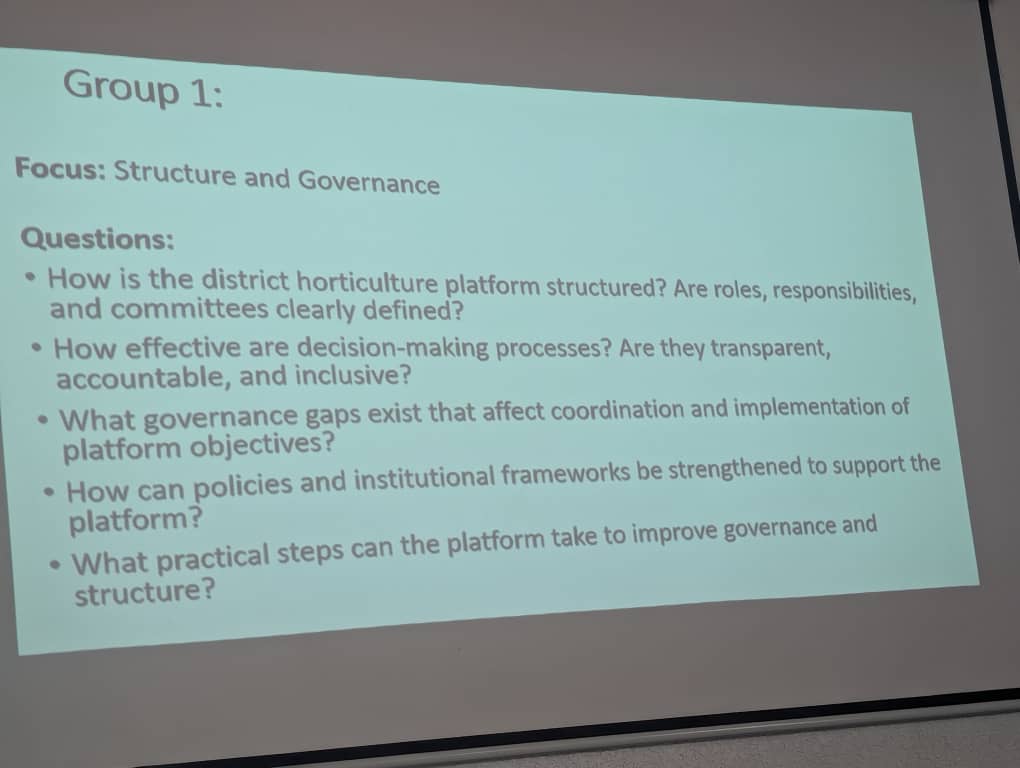
Paul Mbonyi, an official at ADECOR, said that the consultative meeting brought together leaders from the northern-to-western corridor, representatives of public authorities, associations involved in the vegetable and fruit value chain, as well as district staff responsible for promoting cash crops.
He explained that the meeting also included training sessions and aimed to promote proper nutrition while building the capacity of institutions and associations.
According to Mbonyi, the discussions focused on two key areas: improving food safety and quality from farm to table, and analyzing challenges facing associations within the vegetable and fruit value chain.
These challenges include issues related to collaboration, capacity, and knowledge, with the goal of developing strategies to improve performance and support members in achieving sustainable development.
He added that there remains a significant knowledge gap regarding quality standards, which affects human health and the economic wellbeing of farmers and traders. Poor handling can lead to spoilage of fruits and vegetables, causing losses and eroding consumer trust in the market.
He emphasized that adhering to quality standards is essential not only for protecting public health but also for building consumer confidence.
Mbonyi also pointed out ongoing challenges related to non-compliance with recommended standards in the use of chemical fertilizers and pesticides.
He clarified that the issue is not their use per se, but rather using them in appropriate quantities and combining chemical fertilizers with organic manure to protect soil health and the environment.
He further noted that some key actors in the value chain such as transporters, financial institutions, and agricultural input suppliers are often insufficiently involved. For investment to materialize, all these actors must be fully integrated into the value chain.
He said: “Starting is difficult, and many platforms do not last long. That is why they need training, leadership and management skills, and support in mobilizing resources and partners. It is essential for all stakeholders,local authorities, civil society organizations like ADECOR, and government institutions to work together to help associations become strong and sustainable.”
He also highlighted the importance of collaboration among the Ministry of Agriculture and Animal Resources, the Ministry of Trade, and government agencies such as RAB and NAEB in supporting associations to understand and comply with laws and regulations related to collaboration, quality standards, and post-harvest management within the vegetable and fruit value chain. This cooperation helps reduce challenges and losses previously caused by lack of markets and misunderstandings among value chain actors.
In this context, ADECOR organized a two-day meeting held on December 15–16, 2025, in Musanze District. The meeting aimed to strengthen collaboration among actors in the vegetable and fruit value chain operating under agroecological practices.
The meeting focused on improving food security, promoting sustainable production, and enhancing competitiveness in markets within the Northern Corridor.
Participants came from Rubavu, Nyabihu, Musanze, Gakenke, and Rulindo districts, including members of value chain association committees, local government agricultural officers, private sector actors, technical and vocational institutions, and consumer representatives.
This initiative directly supports government priorities related to food safety compliance, sustainable agriculture, and expanding access to both domestic and international markets.
The Northern Corridor region is known as one of the country’s most productive areas for vegetables and fruits, playing a crucial role in food security, nutrition, and export markets.
Strengthening associations and collaboration among farmers, traders, local authorities, and national institutions is widely recognized as a key pathway to improving quality, expanding markets, and promoting sustainable, climate-resilient agriculture.





Strengthening the value chain like this is really important for both producers and consumers. I found some interesting related information about supply chain efficiency on https://tinyfun.io/game/shadow-strike, which touched on similar concepts.