
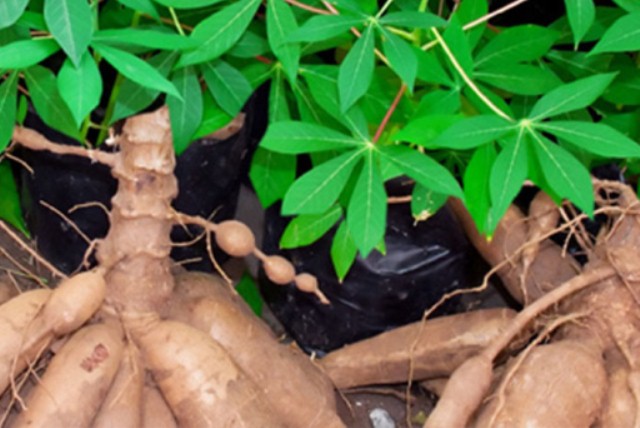
Mayaga Cassava Farmers Concerned Over Shortage of High-Yielding, Disease-Resistant Planting Materials
Cassava farmers in the Mayaga region of Rwanda’s Southern Province are raising concerns over a prolonged shortage of improved cassava planting materials capable of delivering high yields and withstanding crop diseases. They say the varieties previously distributed to farmers have proved vulnerable to major cassava diseases, resulting in declining yields, financial losses and a significant reduction in the land allocated to cassava cultivation.
For many years, Mayaga was regarded as one of Rwanda’s major cassava-producing areas, with the crop serving as an important source of income for thousands of farming households.
Farmers in the region say income generated from cassava production enabled them to improve their livelihoods, expand their farmland, construct houses and pay school fees for their children.
“When we harvested and earned substantial amounts of money, we could buy additional farmland, build houses and send our children to school,” one farmer said.
However, the cassava farming landscape in the region has changed considerably. Many fields that were once dedicated to cassava production have shrunk, while farmers who continue cultivating the crop report significantly lower yields than they used to achieve in previous years.
Farmers identify the lack of disease-resistant planting materials as one of the major factors behind the decline in cassava production, particularly the spread of cassava root rot and Cassava Mosaic Disease (CMD).
These diseases affect crop development, causing plants to deteriorate, dry out or develop root decay, ultimately undermining productivity and reducing harvests.
Another farmer described how the problem initially emerged, saying: “At first, you would plant the cassava and it would sprout, but then it would start drying up. Even when it grew taller, you would inspect it only to find that the roots had rotted.”
The decline in cassava production has also affected local markets and household food supplies. Residents recall a time when almost every household in Mayaga had cassava drying outside, while large numbers of people could be seen along roadsides peeling and preparing the crop for sale. These activities reflected the region’s once-abundant cassava harvests.
Today, however, the situation has changed. Residents say cassava flour has become increasingly expensive, with a kilogram reportedly selling for Rwf1,000, a price they describe as unusually high compared with previous years.
In response to the concerns, the Rwanda Agriculture and Animal Resources Development Board (RAB) says it is continuing research and the multiplication of improved crop varieties to boost agricultural productivity and help farmers overcome disease-related challenges.
RAB’s Acting Director General, Dr Florence Uwamahoro, has assured farmers in Mayaga that new cassava planting materials are expected to become available soon.
She said the improved variety is expected to help farmers combat major diseases, including cassava root rot and Cassava Mosaic Disease, which have significantly affected cassava production in the region.
Data from the National Institute of Statistics of Rwanda (NISR) also point to changes in the country’s cassava cultivation patterns.
According to NISR, cassava was planted on more than 247,000 hectares nationwide during Season A of 2025.
In Season A of 2026, the area planted with cassava stood at more than 236,000 hectares, while the area recorded as harvested exceeded 41,000 hectares.
The figures indicate a substantial difference between the area planted and the area harvested. However, further clarification is needed to establish the factors behind this gap and determine the extent to which crop failure, harvesting schedules or other agricultural factors contributed to it.
As farmers in Mayaga await the anticipated release of improved cassava planting materials, they are calling for sustainable interventions, including the timely distribution of certified, high-quality and disease-resistant varieties, stronger disease-control measures and increased access to agricultural extension services.
They argue that restoring cassava production is essential to revitalising household incomes, strengthening local food security and returning the crop to its former position as one of the main pillars of the region’s rural economy.
Written by Zawadi Deborah Irakoze
Src:RBA