Natural Agriculture vs Conventional Agriculture: Rethinking the Future of Food Systems
As global food systems face increasing pressure from climate change, soil degradation, and biodiversity loss, the debate between natural agriculture and conventional agriculture has become more urgent than ever. While both systems aim to produce food, they differ significantly in their ecological impact, sustainability, and long-term viability.
Understanding Natural Agriculture
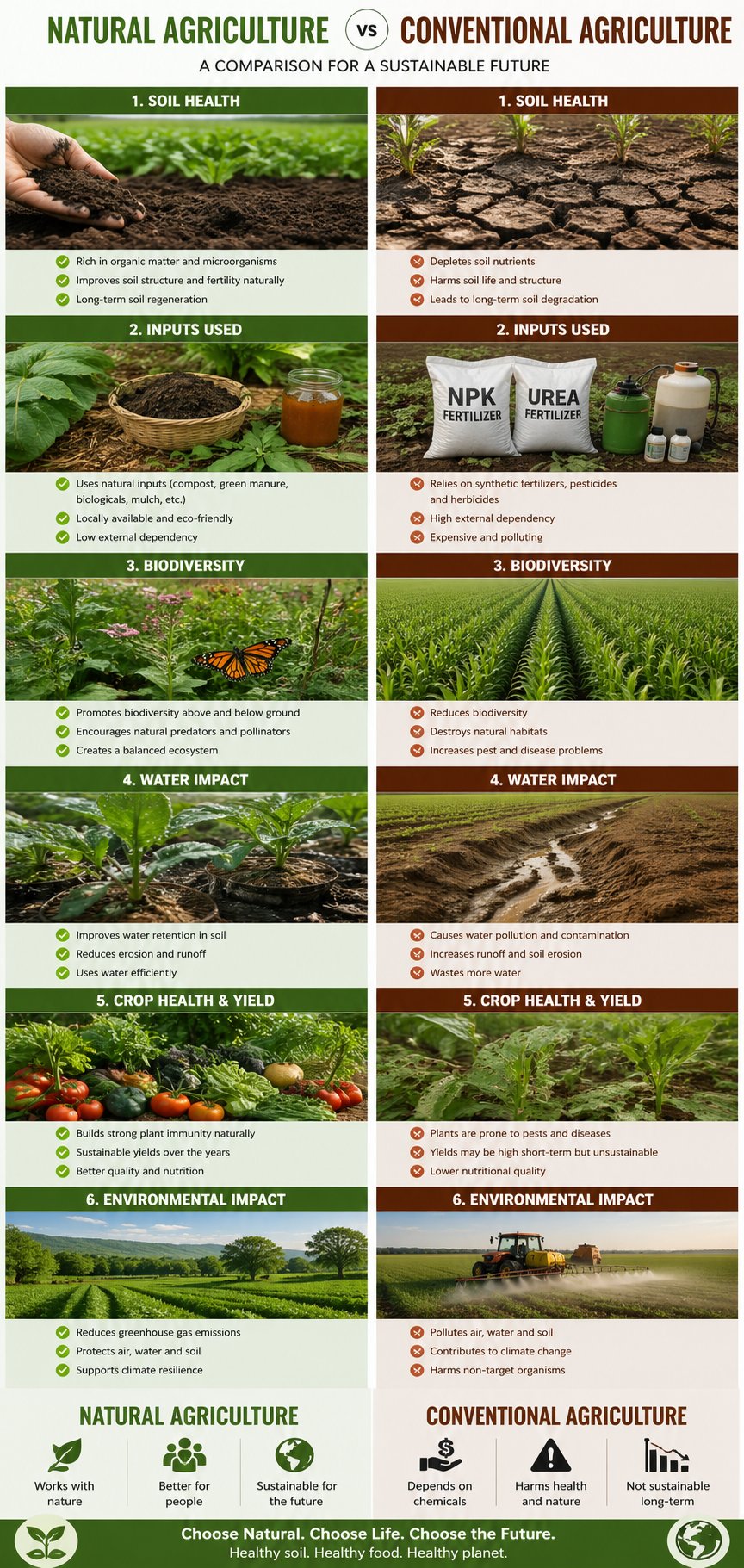
Natural agriculture,often aligned with agroecology and regenerative farming is rooted in working with nature rather than against it. This approach emphasizes:
Soil regeneration through organic matter such as compost and green manure
Biodiversity enhancement, including beneficial insects and microorganisms
Minimal external inputs, reducing reliance on synthetic chemicals
Ecosystem balance, where crops, soil, water, and living organisms interact sustainably
By strengthening the soil microbiome and improving water retention, natural agriculture builds resilience to climate shocks such as droughts and floods. Over time, it supports stable yields while preserving environmental integrity.
The Reality of Conventional Agriculture
Conventional agriculture, which dominates global food production, relies heavily on:
Synthetic fertilizers (e.g., NPK, urea)
Chemical pesticides and herbicides
Monoculture cropping systems
Although this system can deliver high yields in the short term, it often comes at a cost:
Soil degradation and loss of fertility
Decline in biodiversity, including pollinators and soil organisms
Water pollution due to runoff of agrochemicals
Greenhouse gas emissions, contributing to climate change
These impacts raise serious concerns about the long-term sustainability of conventional farming systems.
Environmental and Socio-Economic Implications
The contrast between these two systems goes beyond productivity. It touches on broader issues of:
Food security: Sustainable systems ensure long-term availability of nutritious food
Public health: Reduced chemical exposure benefits both farmers and consumers
Economic resilience: Lower dependency on external inputs reduces production costs over time
Climate action: Natural systems act as carbon sinks, helping mitigate climate change
For countries like Rwanda, where agriculture is central to livelihoods, adopting sustainable and climate-smart practices is critical for both environmental protection and economic development.
A Necessary Transition
The transition from conventional to natural agriculture is not without challenges. Farmers may face:
Initial yield fluctuations
Limited access to knowledge and training
Market barriers for organic or sustainably produced goods
However, with the right policies, education, and investment, this transition can unlock significant benefits. Supporting farmers through agroecology training, research, and access to markets is essential.
A Strategic Path Forward
The choice between natural and conventional agriculture is ultimately a choice about the future. While conventional systems may offer short-term productivity, natural agriculture provides a long-term, sustainable pathway that aligns with environmental conservation, climate resilience, and human well-being.
As the global community seeks solutions to interconnected crises, agroecology and regenerative agriculture are emerging as transformative approaches not just for farming, but for the future of our planet.